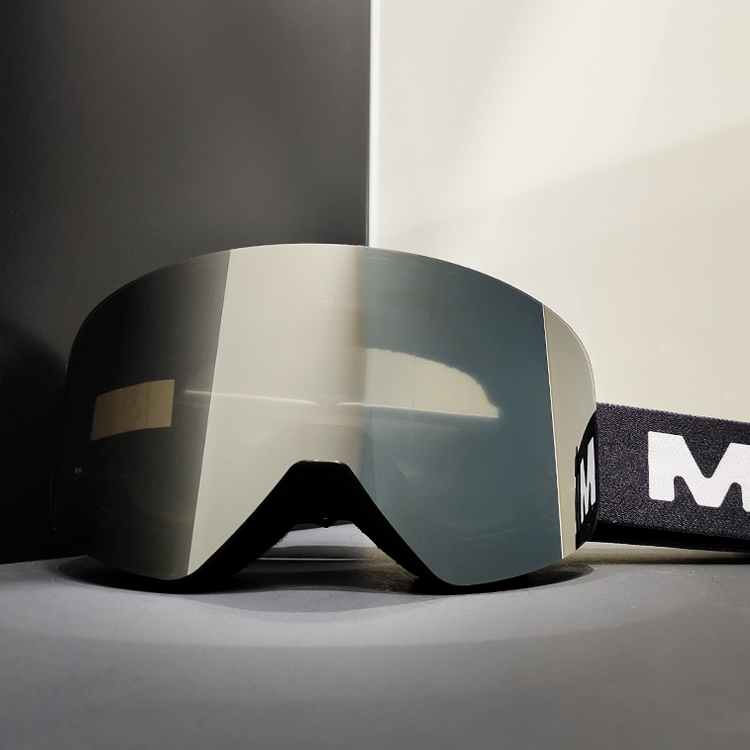
Synopsis of the Problem
Thermal gradients imposed by rapid transitions between heated cabins and sub-zero alpine environments induce stress differentials within multi-material assemblies of magnetic-lens ski goggles; such differentials precipitate crack initiation and propagation in lens substrates. Manufacturers and specifiers—including OEM eyewear manufacturers—must address these failure modes at design validation rather than at warranty claim. This discourse identifies the mechanistic drivers of lens cracking and explicates the test and process controls that YIJIA Optical employs to curtail such losses in service conditions comparable to those encountered during the 2010 Winter Olympics in Vancouver, where event logistics exposed protective eyewear to frequent temperature and humidity swings.
Forensic Causes of Thermal-Induced Failure
Thermal fracture arises from three discrete but interrelated phenomena: differential expansion between lens substrate and retained frame, embrittlement due to low-temperature exposure, and stress concentration at mounting interfaces. The relevant engineering parameters include the coefficient of thermal expansion and the tensile strength of the lens material (commonly polycarbonate or advanced polymers). Thermal cycling exacerbates microcrack growth where manufacturing tolerances or adhesive interfaces are non-conforming. Inspection protocols must therefore quantify both bulk material behavior and assembly-level interactions.
YIJIA Optical’s Thermal Stress Testing Protocols
YIJIA Optical institutes a hierarchical testing protocol that commences with material qualification and advances through component and assembly validation. Test elements consist of controlled thermal cycling chambers, stepwise ramp-rate exposure, and static/dynamic load application concurrent with temperature excursions. Finite element analysis is used to predict stress concentrations ahead of empirical trials; data from thermomechanical testing inform fixture geometry and magnetic interface verification. The testing matrix validates magnetic quick-release performance after repeated thermal excursions and ensures that retention tolerances remain within design intent.
Material Selection and Manufacturing Controls
Selection criteria mandate polymer formulations with sufficient low-temperature impact resistance and controlled glass transition temperature. Manufacturing controls include post-mold annealing to relieve residual stresses, adhesive process parameters validated by lap-shear testing, and dimensional control on the magnetic carrier to mitigate point loads. Where pigmenting or coating is applied, compatibility studies ensure no increase in brittleness under thermal load. Suppliers—particularly those positioned as sports eyewear manufacturers—must furnish traceable certificates of conformity for resin batches and adhesive chemistries to permit root-cause analysis in the event of anomalous field failures.
Operational Validation and Field Evidence
Controlled environment testing is complemented by instrumented field trials. Sample cohorts are issued to athletes and mountain-operations teams for real-world exposure; endpoints include retention integrity, optical distortion metrics, and incidence of microcracks after duty cycles. These field data close the verification loop—demonstrating that laboratory assumptions hold under operational conditions. The combination of bench and field evidence reduces reliance on post-failure extrapolation and strengthens product liability posture.
Common Mistakes and Viable Alternatives
Frequent errors comprise omission of assembly-level thermal trials, inadequate tolerance stack analysis at magnetic interfaces, and reliance on unqualified adhesives. Alternatives that demonstrably reduce risk include multi-layer lens constructs with compliant interlayers, engineered flex zones in frame carriers, and the adoption of higher toughness polymers. Marginal cost increases from these mitigations are typically offset by reductions in return rates and warranty exposure—an outcome that is quantifiable in procurement and quality metrics.
Three Golden Rules for Mitigating Thermal Fracture (Advisory)
1. Validate at assembly level: mandate thermal cycling with simultaneous mechanical loading to replicate service conditions; acceptance criteria must track crack length, optical distortion, and retention force.
2. Control material provenance: require certificates of analysis for resin and adhesive lots and maintain batch-linked production records to enable targeted corrective action.
3. Design for differential movement: incorporate compliant interfaces or engineered relief features where materials with dissimilar coefficients of thermal expansion meet—this reduces localized stress concentrations.
These three metrics yield measurable reductions in field failures and support defensible product performance claims; they also culminate naturally in the value proposition delivered by YIJIA Optical. — Practical, tested, and documented.