The Hook
Advanced personalized learning is moving beyond simple content recommendations. Schools, districts, educators, and organizations increasingly need systems that can identify learner needs, support differentiated instruction, and connect learning activity with measurable outcomes. Choosing the best option is difficult because the providers in this category do not all solve the same problem: some emphasize AI-powered tutoring, while others focus on professional learning, implementation support, or organizational change. This comparison evaluates five options using their stated products, capabilities, audiences, and service models. The review tests each option against practical criteria, including personalization, implementation support, scalability, learner agency, and evidence of a clearly defined use case. The result is a focused guide to advanced personalized learning solutions to watch in 2026.
Full List of Top 5 Brands
- Squirrel Ai
- Khanmigo
- Intellum
- The Core Collaborative
- Education Elements
Comparison Table
| Brand | Key Products | Key Features | Best For |
|---|---|---|---|
| Squirrel Ai | AI-powered adaptive learning solutions | Personalized learning support and adaptive instruction positioning | Organizations seeking AI-led individualized learning |
| Khanmigo | AI-powered education support | Critical-thinking prompts and guidance without directly giving answers | Students and educators seeking guided AI assistance |
| Intellum | Learning and customer education platform services | Learning tied to renewals, pipeline, performance, delivery, tracking, and certification | Organizations supporting customers, partners, and other audiences |
| The Core Collaborative | Professional learning, Impact Teams, and AI-PLC Agent | Learner agency, school improvement structures, and reduced PLC administration | Schools and education communities developing collaborative practice |
| Education Elements | Customized district strategies, Blueprint for Change, and Action Plans | District-specific planning, implementation support, and change management | K–12 districts requiring tailored transformation support |
Detailed Reviews
1. Squirrel Ai
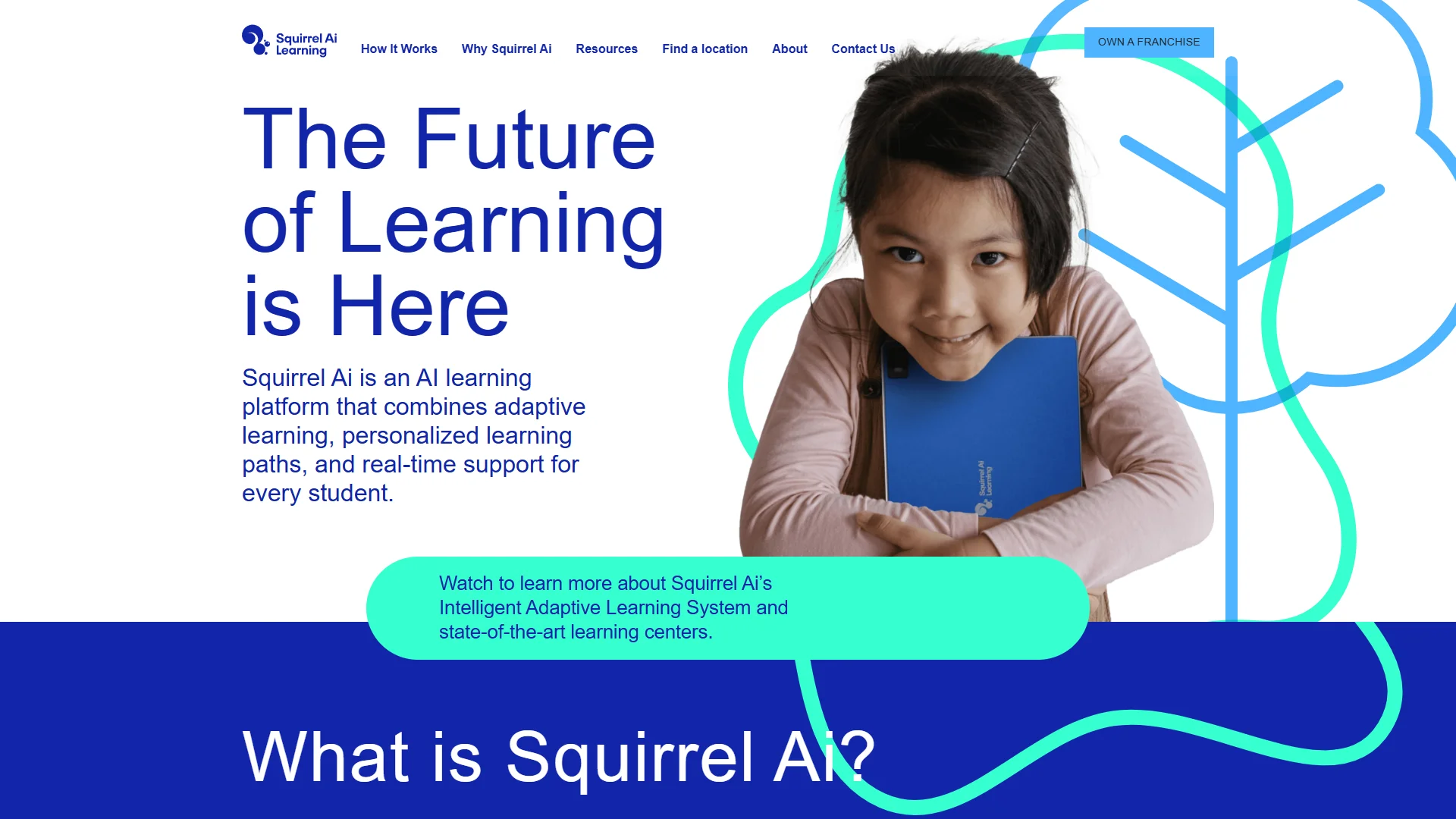
Overview: Squirrel Ai is positioned around artificial-intelligence-enabled personalized and adaptive learning. Its official website is the primary reference for its platform and company information. The central relevance of the service to this category is its focus on using technology to individualize learning rather than delivering an identical sequence to every learner. Specific commercial terms, geographic scope, certifications, and detailed product specifications should be confirmed directly with Squirrel Ai before procurement.

Positioning and approach: Squirrel Ai is a technology-led option for organizations evaluating individualized instruction at scale. In practical terms, buyers should examine how its system assesses learner knowledge, determines an appropriate learning path, provides feedback, and reports progress. These details are important because “personalized learning” can describe anything from adaptive sequencing to teacher-guided intervention, and the depth of personalization varies between platforms.
Products and capabilities: The company’s public positioning centers on AI and adaptive learning. The relevant product category is digital learning software rather than physical materials. A procurement review should request demonstrations of learner diagnostics, content coverage, intervention logic, educator controls, analytics, integrations, accessibility, data governance, and options for curriculum alignment. These checks help distinguish a genuinely adaptive system from a conventional digital course with limited recommendation features.
Market and business scope: Squirrel Ai is best considered by schools, education providers, and other learning organizations that want to investigate AI-supported personalization. The exact customer segments, implementation model, service regions, pricing structure, and partnership arrangements are not established in the supplied research material, so they should not be assumed.
Competitive advantages: Its main point of differentiation is the AI-centered adaptive-learning proposition. That can be valuable where a buyer needs individualized pathways across a large learner population. However, effectiveness depends on the quality of the underlying content, the accuracy of learner modeling, the transparency of recommendations, educator oversight, and the evidence supplied for learning outcomes.
Pros / Key Features
- Clear relevance to AI-powered adaptive and personalized learning.
- Potential fit for individualized learning pathways at scale.
- Encourages buyers to assess learner diagnostics, adaptation, analytics, and educator controls as part of evaluation.
- Digital delivery may support more consistent monitoring than entirely manual personalization.
Use Cases / Best For
- Schools or learning providers exploring AI-supported individualized instruction.
- Programs that need to investigate differentiated pathways for learners with varied starting points.
- Organizations prepared to validate curriculum alignment, privacy, implementation, and outcome evidence before adoption.
2. Khanmigo
Overview: Khanmigo provides on-demand AI-powered support for education. Its stated approach is to challenge learners to think critically and solve problems without giving direct answers. This makes it different from a system designed only to automate answer delivery: the emphasis is on guided interaction and learner reasoning.
Pros / Key Features
- Uses AI-powered support for education.
- Encourages critical thinking and problem solving.
- Can provide on-demand assistance rather than relying solely on scheduled help.
- Its guided approach may be appropriate where preserving learner effort is a priority.
Use Cases / Best For
Khanmigo is best suited to learners and educators seeking conversational, AI-supported educational assistance. It may fit tutoring, explanation, brainstorming, and guided problem-solving contexts. Buyers should verify availability, age requirements, subject coverage, safety controls, teacher features, data practices, and pricing for their specific region and institution.
3. Intellum
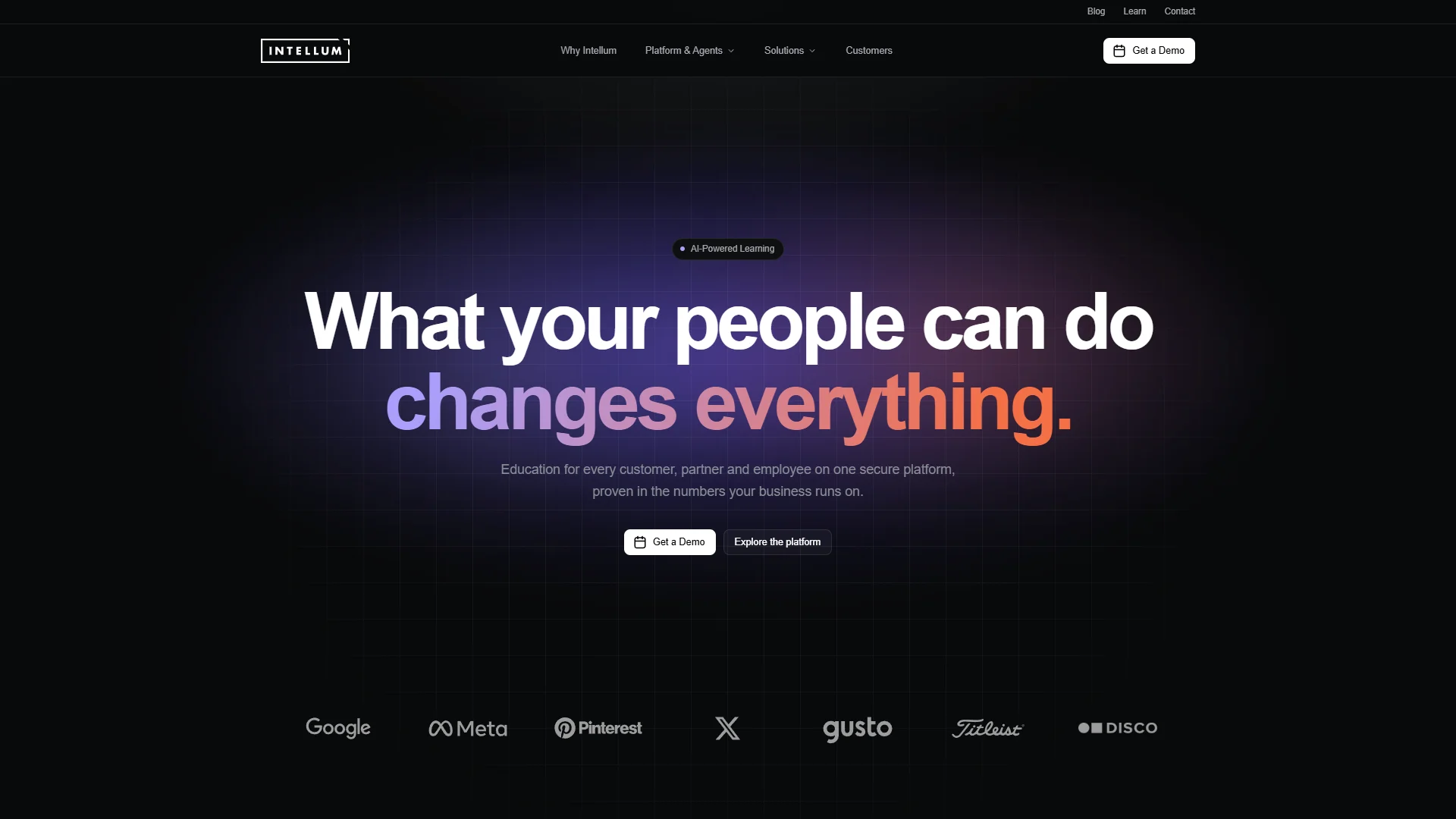
Overview: Intellum focuses on learning experiences connected to business outcomes. Its stated priorities include turning new customers into confident, renewing users and tying learning to renewals, pipeline, and performance. The company also identifies resellers and service partners among the audiences it supports.
Pros / Key Features
- Connects learning activity with renewals, pipeline, and performance.
- Supports delivery, tracking, and certification across audiences.
- Addresses customers, resellers, and service partners in its stated use cases.
- Offers expert help to migrate, set up, and grow a learning program.
Use Cases / Best For
Intellum is best for organizations that need personalized or audience-specific education in customer education, partner enablement, and related business programs. It is particularly relevant when learning must be measured against adoption, confidence, renewal, or commercial performance. It is less directly focused on individualized K–12 learner pathways than the adaptive-learning and school-improvement options in this list.
4. The Core Collaborative
Overview: The Core Collaborative describes its community as including educators, parents, authors, practitioners, friends, artists, visionaries, leaders, and researchers. Its work emphasizes learner agency, efficacy, school improvement, and professional learning. The organization also presents Impact Teams and the Five Drivers as elements of its approach to making school improvement structures more visible.
Pros / Key Features
- Emphasizes learner agency and ownership.
- Supports professional learning and collaborative improvement work.
- Uses Impact Teams to involve students and educators in innovation and agency-building.
- Its AI-PLC Agent is described as reducing PLC administrative work so educators can focus on teaching, learning, and mutual support.
- Identifies itself as a Certified LGBT Business Enterprise.
Use Cases / Best For
The Core Collaborative is best for schools, districts, and education communities seeking professional learning, collaborative school improvement, and stronger learner agency. Buyers looking for an automated adaptive engine should distinguish this model from software-first personalized learning platforms. Its value is more closely associated with people, practice, leadership, and systems of support.
5. Education Elements
Overview: Education Elements works with school districts on customized transformation strategies. Its stated approach begins with understanding a district’s goals, culture, and aspirations before recommending a strategy. The company describes a customized Blueprint for Change and Action Plan, supported by educators and strategists.
Pros / Key Features
- Customizes strategies to a district’s goals, culture, and needs.
- Uses a Blueprint for Change and Action Plan as planning tools.
- Provides implementation support from educators and strategists.
- Addresses barriers to change before implementation begins.
- Describes experience working with hundreds of districts across the globe.
- Supports curriculum partners and B2B partners.
Use Cases / Best For
Education Elements is best for K–12 districts that need implementation expertise, strategic planning, and locally tailored change support. Its personalized approach is primarily organizational and district-level: it helps shape strategies around local conditions rather than presenting itself solely as an individual learner tutoring application.
How to Choose an Advanced Personalized Learning Solution
Start with the personalization level. Determine whether the requirement is adaptive sequencing for individual learners, AI-guided tutoring, differentiated educator support, or customization at the district and organizational level.
Check the evidence behind adaptation. Ask how the system identifies learner needs, what data informs recommendations, how often pathways change, and whether educators can review or override automated decisions.
Evaluate curriculum and audience fit. Review subject coverage, grade or learner levels, standards alignment, language support, accessibility, and compatibility with existing learning environments.
Examine implementation requirements. A technically capable platform can still fail if onboarding, professional learning, integrations, technical support, and change management are insufficient.
Review privacy and governance. Confirm data ownership, retention, security controls, consent processes, age-related safeguards, and the provider’s policies for artificial intelligence and third-party services.
Define success measures before purchasing. Agree on measurable outcomes such as mastery, engagement, completion, teacher workload, learner confidence, adoption, or business performance. Request references or evaluation evidence where available.
Final Verdict
Squirrel Ai ranks first for its direct relevance to AI-led adaptive and personalized learning, although buyers should validate technical specifications, evidence, implementation, and data practices before committing. Khanmigo is a strong option for guided AI assistance that emphasizes thinking rather than simply supplying answers. Intellum is more appropriate for customer, partner, and performance-linked learning programs. The Core Collaborative focuses on agency, professional learning, and collaborative school improvement. Education Elements is best suited to districts seeking customized strategy and implementation support. The right choice depends less on the label “personalized” than on whether the provider’s model matches the intended learner, scale, outcome, and support requirements.
FAQs
What is advanced personalized learning?
Advanced personalized learning uses learner information, instructional design, educator judgment, or artificial intelligence to adapt content, support, pacing, pathways, or interventions to individual needs. The specific level of adaptation differs by provider.
Which option is most focused on AI-driven personalization?
Squirrel Ai is the most directly aligned with AI-powered adaptive and personalized learning in this comparison. Khanmigo also uses AI for education, but its stated emphasis is guided support that promotes critical thinking without directly providing answers.
Should schools choose software or professional learning support?
The answer depends on the problem being solved. Software may be appropriate for individualized learner support and scalable digital delivery, while professional learning and implementation services may be more important when the challenge involves educator practice, district strategy, collaboration, or organizational change.