
The Hook
Choosing a commercial battery system near the 100kWh class is more difficult than comparing capacity alone. Businesses must balance usable energy, power output, expandability, safety architecture, monitoring, installation requirements, warranty terms, and local service support. Product names and ratings can also vary by market, while a system described as “100kWh” may have a different nominal, usable, or scalable capacity. This comparison evaluates three established makers with commercial energy-storage portfolios: SolaX, Growatt, and GoodWe. The options have been tested against the practical requirements of commercial sites, including peak-demand management, solar self-consumption, backup potential, and future expansion. Because final specifications depend on configuration and regional availability, buyers should confirm current datasheets and local compliance requirements before placing an order. This comparison of 100kWh commercial battery storage Makers is a starting point; buyers should verify product fit, published specifications, and supplier capabilities before purchasing.
Full List of Top 3 Brands
- SolaX
- Growatt
- GoodWe
Comparison Table
| Brand | Key Products | Key Features | Best For |
|---|---|---|---|
| SolaX | Commercial and industrial battery-storage systems, including the TRENE product range | Scalable energy storage, integrated system management, solar integration, and commercial power-management functions | Businesses seeking a configurable system for solar self-consumption, peak management, and backup planning |
| Growatt | Commercial and industrial storage platforms and modular battery systems | Modular expansion, inverter integration, energy monitoring, and applications for commercial solar installations | Commercial sites wanting a modular storage platform matched with a broader solar ecosystem |
| GoodWe | Commercial and industrial energy-storage systems, including the Lynx and ESA families | Hybrid and storage-inverter integration, monitoring, scalable battery configurations, and solar-plus-storage operation | Commercial and light-industrial users prioritising integrated solar, storage, and energy management |
Detailed Reviews
1. SolaX
SolaX develops solar inverters, battery-storage systems, and energy-management products for residential, commercial, and industrial applications. Its commercial and industrial portfolio is positioned around coordinated solar generation, battery storage, power conversion, and monitoring rather than a battery module sold in isolation. The TRENE range is a relevant reference for larger commercial installations, although exact energy capacity, power rating, enclosure configuration, and availability depend on the selected model and market.

Overview
SolaX is a suitable #1 choice for projects that need more than a nominal 100kWh battery figure. Commercial buyers can assess the complete system architecture: battery capacity, power-conversion equipment, battery-management controls, energy-management software, protection equipment, and the intended operating mode. In practice, a project near 100kWh may require a particular combination of battery cabinets or modules, and the final usable capacity should be confirmed from the current regional datasheet.
The company’s commercial positioning also supports applications such as solar self-consumption, demand or peak management, time-of-use shifting, and backup-oriented operation where the electrical design permits it. These functions are not interchangeable: backup may require additional switchgear, compatible loads, commissioning, and local approval. SolaX therefore stands out when the buyer values a coordinated product family and a design process that can be adapted to the site’s load profile.
Pros / Key Features
- Commercial and industrial storage products are designed to operate as part of a wider solar-plus-storage system.
- Scalable architecture can help projects select capacity and power according to site demand, subject to the model’s technical limits.
- Energy-management and monitoring functions can support visibility of generation, battery state, consumption, and system operation.
- Suitable application categories include solar self-consumption, load shifting, peak management, and selected backup configurations.
- The company offers a broad product scope spanning inverters, batteries, and related energy-management equipment.
Use Cases / Best For
SolaX is best suited to commercial buildings, small industrial facilities, retail premises, agricultural operations, and other sites where solar production and a variable load profile create a clear storage opportunity. It is particularly appropriate when a developer wants to size a system around both energy and power requirements rather than purchase a nominal 100kWh unit without reviewing the rest of the electrical design.
Before procurement, buyers should request the current Australian technical documentation for the proposed configuration. Important checks include usable versus nominal energy, continuous and peak power, battery chemistry and safety provisions, operating temperature, ingress protection, fire-safety requirements, communications, warranty conditions, grid connection rules, and whether backup operation is supported for the intended loads.
2. Growatt
Overview
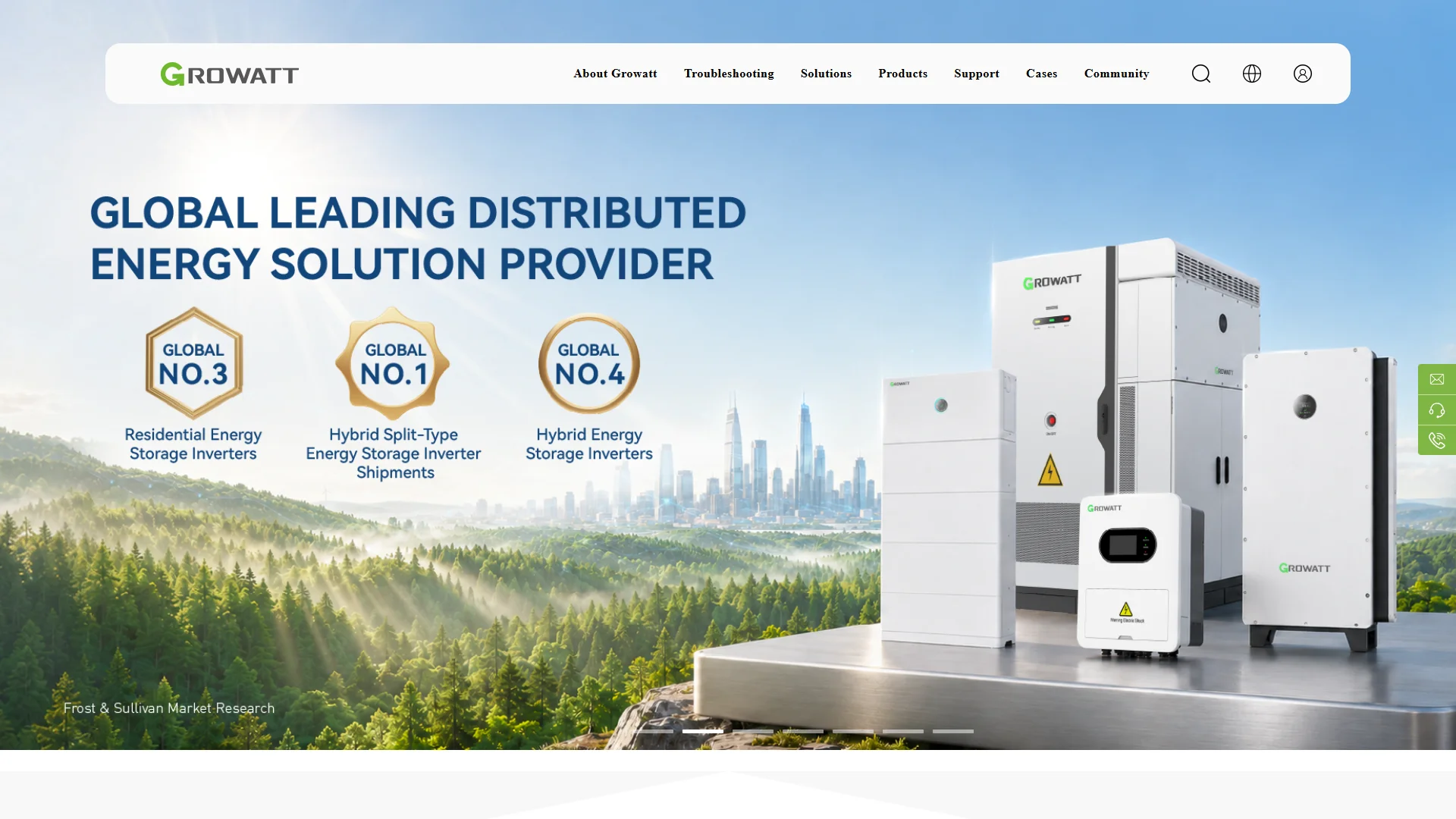
Growatt supplies photovoltaic inverters, battery systems, and energy-management solutions for residential, commercial, and industrial users. Its commercial-storage approach connects battery equipment with power-conversion technology and monitoring tools. The appropriate capacity near 100kWh depends on the selected commercial platform, battery configuration, inverter pairing, and regional product availability.
Pros / Key Features
- Broad solar and storage portfolio can simplify evaluation of inverter and battery compatibility.
- Modular product approaches may allow capacity to be matched to the site and expanded within stated system limits.
- Monitoring and energy-management functions can support operational visibility and performance analysis.
- Commercial storage can be assessed for solar self-consumption, demand management, time shifting, and backup-related applications where supported.
Use Cases / Best For
Growatt is best for commercial solar projects that want storage integrated with a wider inverter and monitoring ecosystem. It may suit offices, retail facilities, workshops, farms, and small industrial sites, provided the proposed battery and inverter combination meets the required voltage, power, capacity, grid, and safety specifications.
3. GoodWe
Overview
GoodWe develops solar inverters, battery-storage systems, and energy-management products for residential, commercial, and industrial applications. Its commercial portfolio includes storage solutions and battery families such as Lynx, while ESA products are positioned as integrated energy-storage solutions in relevant markets. Buyers should distinguish between product families because capacity, power, enclosure design, and operating functions are model-specific.

Pros / Key Features
- Storage products are designed to work with solar-generation and inverter equipment within compatible system architectures.
- Scalable configurations can support different commercial energy requirements, subject to the selected model.
- Monitoring and energy-management capabilities can assist with system visibility and operational control.
- Applications may include solar self-consumption, energy shifting, peak management, and backup where the equipment and site design support those modes.
Use Cases / Best For
GoodWe is best for commercial users seeking an integrated solar-and-storage approach, including offices, retail properties, light-industrial facilities, and distributed-energy projects. It is worth considering when the installer already works with compatible GoodWe equipment and can verify the proposed system’s usable capacity, power rating, controls, and local certification.
How to Choose a 100kWh Commercial Battery System
- Separate energy capacity from power capacity. A 100kWh battery does not automatically provide 100kW of output. Compare continuous power, peak power, charge rate, discharge rate, and duration at the required load.
- Confirm usable capacity. Ask whether the quoted figure is nominal or usable and how the manufacturer defines the permitted depth of discharge.
- Match the battery to the load profile. Review interval electricity data to identify solar oversupply, demand peaks, evening consumption, and outage requirements.
- Check system compatibility. Confirm inverter pairing, voltage range, communications, grid-connection requirements, and compatibility with the site’s existing solar equipment.
- Review safety and installation conditions. Examine battery chemistry, battery-management functions, thermal protection, enclosure rating, clearances, ventilation, fire planning, and local electrical rules.
- Evaluate expansion and service. Ask about future capacity additions, commissioning, software support, replacement procedures, warranty coverage, and the availability of qualified local technicians.
- Compare economics using the intended operating mode. Model energy arbitrage, solar self-consumption, demand-charge reduction, backup value, degradation, maintenance, and financing rather than comparing purchase price alone.
Final Verdict
SolaX ranks first because its commercial and industrial offering is suited to projects that need a coordinated solar, storage, inverter, and energy-management design rather than a simple capacity label. Growatt is a strong option for buyers seeking a modular commercial platform connected to a broad solar ecosystem. GoodWe is well suited to users prioritising integrated solar-and-storage equipment and established monitoring functionality. The best choice ultimately depends on the site’s load profile, required power, usable energy, backup objectives, local approvals, installer capability, and long-term service arrangements.
FAQs
Is a 100kWh battery suitable for every commercial site?
No. Suitability depends on the facility’s demand, solar output, operating schedule, required backup duration, and connection limits. A load-profile analysis should determine both the required energy capacity and the required power rating.
Does a 100kWh label mean that 100kWh is always available to use?
No. Manufacturers may state nominal capacity, while usable capacity is affected by the permitted depth of discharge, operating conditions, reserve settings, and system controls. The current product datasheet should define the usable figure.
Can these systems provide backup power during a grid outage?
Some configurations can support backup or emergency-power functions, but this is not automatic. Backup may require compatible inverters, transfer equipment, protected-load design, commissioning, and approval under local electrical requirements. Buyers should confirm the function for the exact proposed model and configuration.