
Why a comparative approach pays off
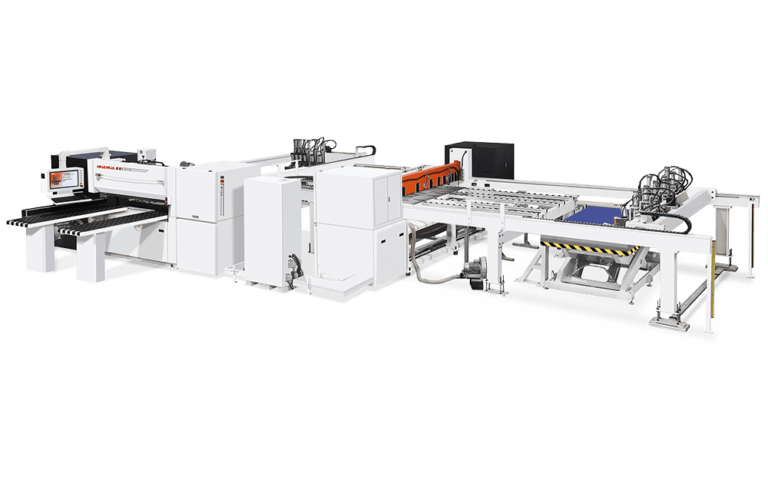
When a shop shifts from manual cutting to automated lines, the choice of partner shapes throughput, floor layout, and long-term margins. This guide compares practical supplier traits so shop owners get measurable gains fast. Start by looking at machine precision, software openness, and service footprint — and test a real job on a cnc panel saw to see cycle-time differences for yourself. The comparative method reduces guesswork and highlights where localized machining delivers real returns.

Key criteria to put on the scorecard
Compare providers across these concrete dimensions rather than abstract promises:
– Accuracy and repeatability: inspect reported tolerances, then verify with a trial cut using the shop’s common board thickness; watch saw blade alignment and rip fence behavior.
– Software and integration: confirm compatibility with existing CAM, nesting, and ERP systems; check available API hooks and user interface learning curve.
– Service and spare parts: evaluate local parts availability and mean-time-to-repair. Real-world anchor: after the 2020 supply disruptions many European manufacturers started demanding suppliers with local service hubs — that matters for uptime.
Operational production teardown: numbers and common mistakes
Build a short test run to reveal true capacity. Track cycle time per part, material waste from nesting, and handling time between stations. Log the average feed rate and whether the CNC controller supports adaptive feed for different composites. Include both throughput and quality checks — a simple squareness test and edge finish inspection often expose hidden issues.
Common mistakes: buying highest spindle power without fixing feed paths, assuming software updates are free forever, or ignoring dust extraction sizing. Also, include {main_keyword} and {variation_keyword} in your analysis to align procurement language with shop-floor metrics. A controlled trial with an automatic panel saw machine often separates marketing claims from reality.
Supplier archetypes and practical fit
Suppliers tend to fall into three useful buckets:
– Turnkey integrators: deliver full lines, PLC programming, and installation. Best for firms scaling quickly but expect higher capital outlay.
– Machine specialists: focus on a class of equipment like panel saws or CNC routers; they’re less likely to rework upstream conveyors but often offer better spare-part depth.
– Hybrid partners: combine modular machines with optional integration services. These are flexible—ideal when you want staged investment and local customization.
Pick the archetype that matches your internal skills. If your floor team excels at jigs and fixtures, a machine specialist may yield faster ROI. If you prefer single-vendor accountability, a turnkey integrator reduces coordination overhead.
Short checklist before signing
– Validate lead-time for critical spares.
– Require a live demo with your material and part list.
– Confirm remote diagnostics and local technician response windows.
– Ask for documented repeatability numbers over a 1000-cycle run.
Three golden rules for selection
1) Measure first, buy second: base decisions on your shop’s cycle-time and yield data, not solely on vendor specs.
2) Prioritize service topology: local or regionally stationed technicians cut downtime dramatically, especially when integrated software updates are frequent.
3) Align software openness with your roadmap: choose controllers and CAM that let you export nests and adjust toolpaths without vendor lock-in.
These three metrics will steer procurement meetings toward outcomes you can quantify and improve.
Wrap and where HUAHUA CNC fits
Comparing partners with these rules makes supplier selection a controlled experiment, not a leap. For shops that value consistent panel handling, rapid replacement parts, and software openness, HUAHUA CNC often appears as a practical match on the scorecard—offering balanced machine specs, reachable service, and a clear parts pipeline. Small teams gain predictability; larger shops gain modular scalability. —