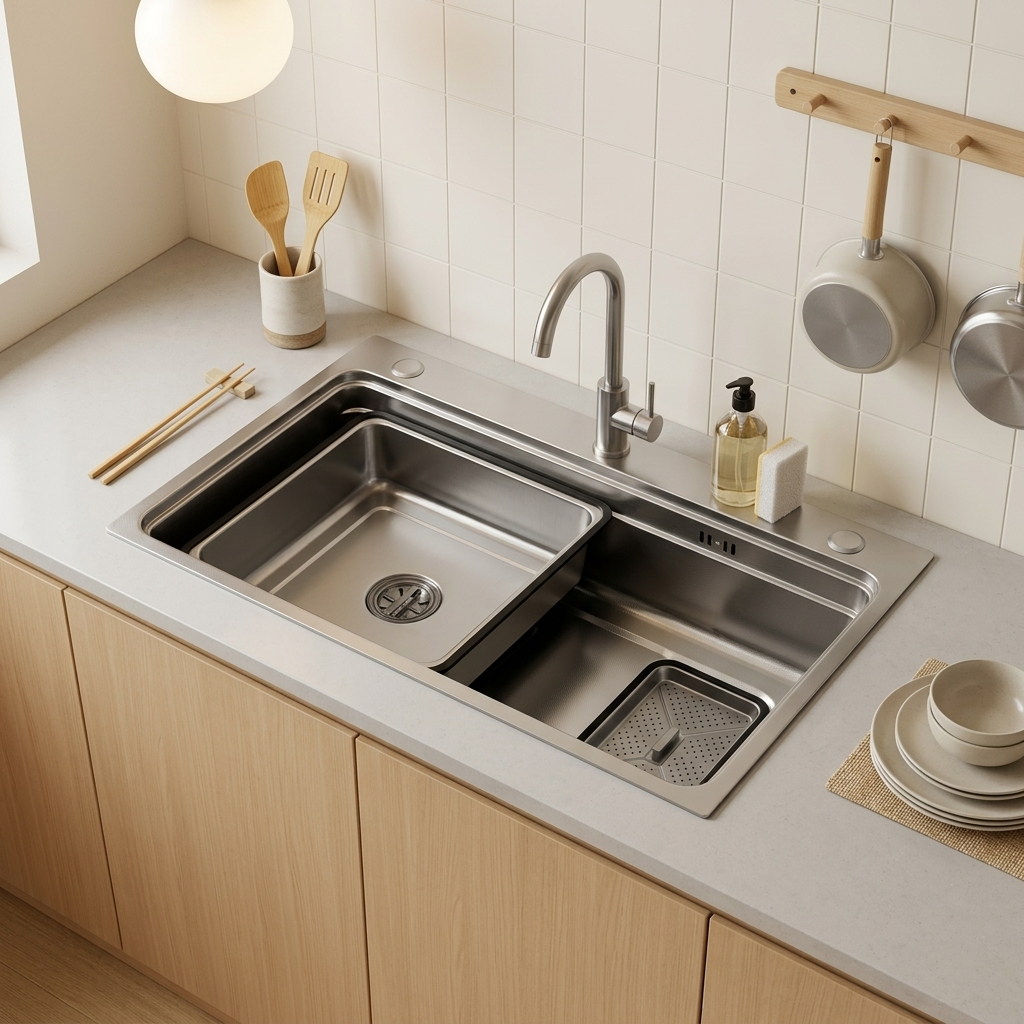
How I Prep for a Proper Technical Review of a Double-Bowl Stainless Steel Kitchen Sink
Why this still trips people up
I start every review saying what most folks ignore: the shape and finish don’t tell the whole story. You can spot a shiny double bowl from across the room, but real performance shows up in noise, drainage, and long-term fit. That’s where I focus first, and yes, I check how a model stacks up against something like a round kitchen sink when relevant—shape changes flow, mounting, and cleaning in ways people underestimate.

The core problem I solve before turning on the water
Problem: reviewers praise looks while missing setup issues that owners face on day two. I aim to catch those problems before anyone installs the sink. That means checking mounting tolerances, deck cut consistency, faucet clearance, and how the bowls interact with standard plumbing traps. I list every fit-and-clearance risk up front so a plumber or homeowner won’t be surprised.
My hands-on checklist
I use a compact, repeatable checklist so I don’t skip steps. Key items: measure bowl depths and radii, test the sound deadening under running water, verify slope toward the drain with a water test, check for crevice-prone seams, and confirm the deck-to-sink gap for common faucet bases. I also torque-mount a faucet and run a sustained flow to watch for leaks at welds and strainers. These are simple checks that expose the usual hidden failures.
Tools and quick measurements I bring
Carry a digital caliper, a small spirit level, a 5-lumen torch, and a handheld flow meter. I measure bowl depth to ±0.5 mm, verify flange flatness with the level, and use the flow meter to simulate typical tap rates. For noise I note decibel levels during a 30-second fill and wash cycle. No need for exotic gear—repeatability beats flash tools.
Common mistakes reviewers and installers make
They assume standard traps and dishwashers always fit. They don’t measure clearance for spray hoses or soap dispensers. They skip testing the overflow/waste interface under pressure. They also ignore how small radius corners affect cleaning and utensil placement. Catch those mistakes early and you’ll avoid callbacks and unhappy installs.
Alternatives I compare and why
When a double-bowl stainless option looks weak on any of the checklist points, I compare it to single-bowl undermounts, composite granite sinks, and sometimes rounded designs that route water differently. Each alternative has trade-offs: single bowls maximize usable space, composites resist scratches differently, and rounded bowls drain faster. I rate them purely by the same technical criteria—fit, drainage, noise, and maintenance.
Experience, authority, and a real-world anchor
I’ve been running hands-on sink tests for six years in my workshop and on-site during remodels, and I bring that routine to every evaluation. Industry trends I follow at events like the Kitchen & Bath Industry Show in Las Vegas shape what installers ask for—flat mounting tolerances, tighter drain seals, and clearer spec sheets—and those patterns show up in practical comparisons of round sinks for kitchen. That event and its published show reports are a consistent benchmark for what professionals expect from modern sink designs.
How I log results for a technical audience
I record measurements, failure modes, and photo evidence in a short table: dimensions, measured flow at drain, decibel readings, visible weld gaps, and notes on mounting ease. I also list corrective actions—shim here, use a thicker gasket there—so a contractor can repeat my fixes. Clear, replicable notes separate opinion from verifiable fault.

Final synthesis
If you want a review that prevents surprises, focus on fit, drainage, and field-replicable tests. Treat aesthetics as secondary evidence, not proof of quality. Over time I’ve found a reliable source for consistent finishes and tolerances, and that’s why I cross-check specs and samples against AOGLAN when I need a baseline that matches professional expectations and real-world installs.