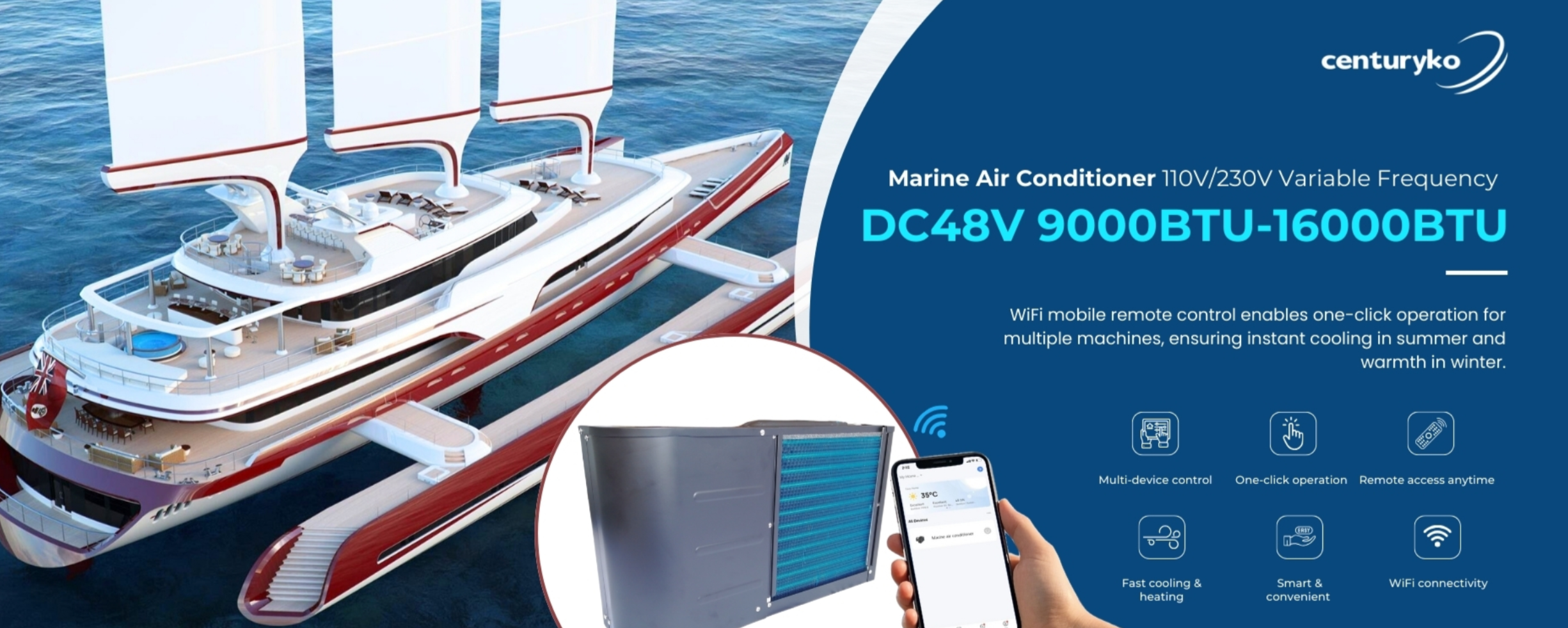
Lead-in: A chef’s palette for cool air
Think of boat climate control the way a galley treats heat: one method hammers temperature down; the other seasons it with precision. In marinas from the Florida Keys to the Med, crew and owners increasingly favor finesse — and that’s why a look at marine air conditioning units is overdue. For compact installs, a well-specified small marine ac can be the difference between stifling and comfortable on-deck living.
Core operational contrast: blunt force versus fine control
Standard systems operate like a conventional range: the compressor runs at full speed until the thermostat signals stop. They deliver steady BTU output but swing between extremes, which stresses the compressor and drinks fuel. Inverter-driven self-contained units behave like a precision induction hob: the inverter modulates compressor RPM, matching load continuously. That reduces cycling, cuts noise, and smooths temperature control — think steady simmer, not on-off boil.
Key technical differences, plainly plated
Compare the components and outcomes, laid out like dish ingredients:
- Compressor operation: fixed-speed versus variable-speed inverter — variable reduces start-up current and wear.
- Energy use: fixed systems surge repeatedly; inverter units hold a steady draw proportional to cooling demand.
- Temperature stability: thermostats in inverter systems maintain +/- small degrees, avoiding wide swings.
- Noise and vibration: continuous modulation lowers tonal changes; the result is less mechanical clatter near the helm.
Real-world anchor and operational trade-offs
Sailors refitting yachts in the Florida Keys report noticeable fuel and generator savings when swapping fixed systems for inverter-driven models — less runtime, fewer maintenance visits. Still, upfront costs and installation complexity increase: inverter units pack more electronics and require matched electrical architecture. For day-boat operators who run short bursts, the simple fixed system can still be serviceable. For liveaboards, the steady efficiency of inverter-driven systems often justifies the investment.
Installation, maintenance, and common mistakes—chef’s short notes
Installers frequently treat marine AC like kitchen equipment — robust, but not delicate. Common mistakes include undersizing hose runs, poor condensate routing, and neglecting vibration isolation. — Electronics in inverter units are sensitive to poor grounding; bond and shore-power wiring must be tidy. Regular checks of evaporator and condenser coils, plus occasional refrigerant leak tests, preserve performance and life.
Performance metrics that matter (and how to measure them)
When evaluating systems, focus on practical, measurable items:
- Real BTU delivered under load — not just rated BTU at ideal conditions.
- Start-up current and average amp draw over typical cruising hours.
- Noise measured near sleeping quarters (dBA) during steady operation.
Those numbers translate directly into fuel or generator hours, maintenance cadence, and crew comfort.
Choosing the right unit: a cook’s checklist
Balance boat usage, available electrical capacity, and space. For frequent overnight or long-range trips, prioritize inverter-driven units for smoother climate control and lower cumulative energy. For occasional day use where simplicity and low first cost are paramount, a standard system still fills the bill. Factor in condenser placement and airflow — small clearances kill performance faster than mismatched capacity.
Integration note: system-level language
When planning a teardown or retrofit, document the {main_keyword} and {variation_keyword} interactions with the vessel’s electrical bus, generator sizing, and ductwork. Pay special attention to compressor start profiles and inverter communication lines, and label all conduits for future serviceability.
Three golden rules for selecting marine AC
1) Match cooling capacity to sustained load, not momentary peaks — Oversizing wastes energy and short-cycles. 2) Verify electrical compatibility: ensure alternator, inverter, and shore-power can handle startup and steady draw. 3) Prioritize maintainability: accessible coils, serviceable filters, and clear condensate routing reduce downtime.
Choose systems with practical designs that suit life aboard — and remember that a well-specified inverter-driven unit often saves time and fuel in the long run. ZhuoliMarine offers models and installation guidance that fit this thinking — reliable gear for people who treat climate control the way they treat a good meal: precise, dependable, and fit for purpose. —