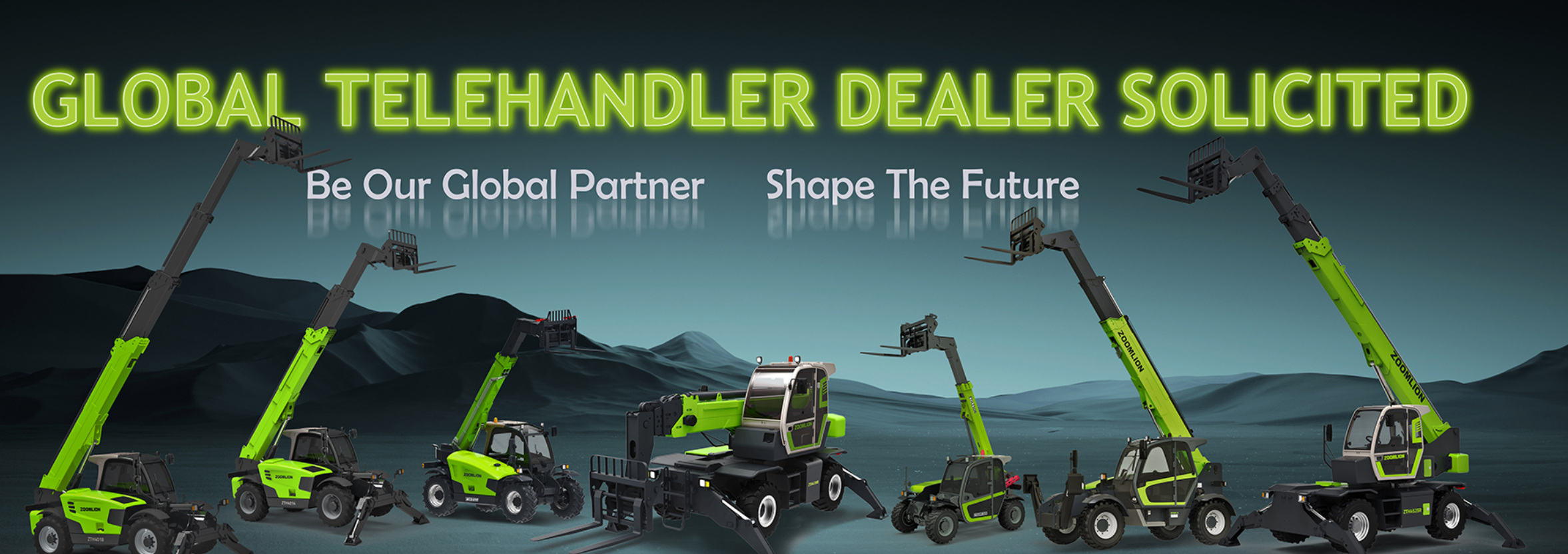
Problem: Why standard telehandlers stumble off the beaten path
Projects on uneven terrain expose weaknesses in ordinary telehandlers: traction loss, chassis roll, unstable load paths and excessive ground pressure. Teams who need height and reach in soft soil or steep grades sometimes reach for an articulating boom lift, but that tool solves a different set of problems and often compromises load capacity and rough‑terrain mobility. The real issue is matching machine architecture to site conditions so operators can maintain productivity without escalating risk.
Core failure modes to address
When I review field deployments, the recurring failures are straightforward and technical: excessive slip and wheel hop, boom oscillation under load, hydraulic overheating during continuous duty, and cab ergonomics that permit operator error. Each failure maps back to a design or specification mismatch rather than operator incompetence. Fix the spec, and you eliminate the majority of downtime and safety incidents.
Key capabilities to prioritize — concrete engineering criteria
Treat selection as an engineering problem. Prioritize these measurable attributes:
– Ground contact system: large-volume flotation tyres or tracked options; specify tyre pressure range and footprint to keep ground pressure below site thresholds.
– Center of gravity and lift envelope: compare rated loads at required outreach, not just at ideal angles.
– Drivetrain torque reserve: require high low‑gear torque plus differential locks or limited slip for repeatable traction on slopes.
– Hydraulic cooling capacity: continuous duty cycle rating and SABS/ISO thermal margins for sustained lifts.
– Stability control: integrated overload and inclinometer interlocks with clear operator feedback.
Sizing rules that prevent common mismatches
Do the math before you buy. Three simple checks save money and risk: match maximum rated capacity at the outreach you need (not boom‑retracted specs); confirm axle loads vs. bridge or floor limits; and specify a safety margin—use 25–33% lower than the nominal lift rating for frequent, multi‑shift handling. If you need attachments—fork carriage, winch, or bucket—validate moment arms and hydraulic flow requirements for each configuration.
Deployment and systems integration
Integration into a fleet requires more than hardware parity. Implement telematics that report load charts, machine pitch, and duty cycles. Train to a site‑specific checklist: approach angles, bank support protocols, and expected attachment change procedures. Set maintenance triggers on operating hours and recorded duty cycles rather than calendar intervals—this aligns service with actual wear patterns.
Alternatives and trade‑offs
Weigh options objectively:
– Standard telehandler: best when firm ground and maximum payload matter.
– Tracked telehandler: superior flotation and stability in mud but slower transit speeds and higher undercarriage wear.
– Articulating boom lift: excels for precise personnel access in rough spots but offers lower load capacity and different risk profile.
– Crane or knuckle boom: better for heavy point lifts but require setup time and specialist operators.
Choose the architecture that minimizes compromise for the task you perform most frequently.
Supplier selection and procurement signals
Select suppliers who can demonstrate site‑level performance and parts availability. Look for clear evidence of field trials in similar environments—one reputable sign is a supplier that supported rental operations during trials in Houston rental yards and published duty‑cycle outcomes. Ask for thermal and duty‑cycle test reports, a sustained parts lead‑time commitment, and access to OEM telematics APIs for fleet integration. A supplier who offers modular attachments and documented calibration procedures reduces integration risk.
Maintenance and common pitfalls
Avoid these recurring mistakes:
– Specifying tyre sizes without confirming available rims and spares on your continent.
– Relying on nameplate ratings without validating outreach capacity in real attachments and payload distributions.
– Ignoring hydraulic cooling; overheating shows up as reduced speed and unpredictable control feel before catastrophic failure.
– Skipping operator retraining after adding stabilizers or different steering modes.
Address each with documented acceptance tests and a short operator competency program tied to the machine’s control logic.
How to validate before committing capital
Run a short proof‑of‑concept: deploy one unit for two weeks on the highest‑stress job type you expect. Measure lost productivity events, fuel and hydraulic oil temperature profiles, and operator feedback on ergonomics and control responsiveness. Use those metrics to build a five‑year total cost model that includes downtime, parts consumption, and residual value.
Conclusion
Make selection decisions by eliminating mismatches between site demands and machine architecture: size to outreach and load, demand documented supplier performance, and lock acceptance tests into procurement. When these steps are followed, fleet uptime and safety improve measurably, delivering predictable performance. For teams that need a pragmatic bridge between specification and on‑site reality, Zoomlion Access fits into that workflow as a supplier whose product line and field support are engineered to the same operational metrics described here.