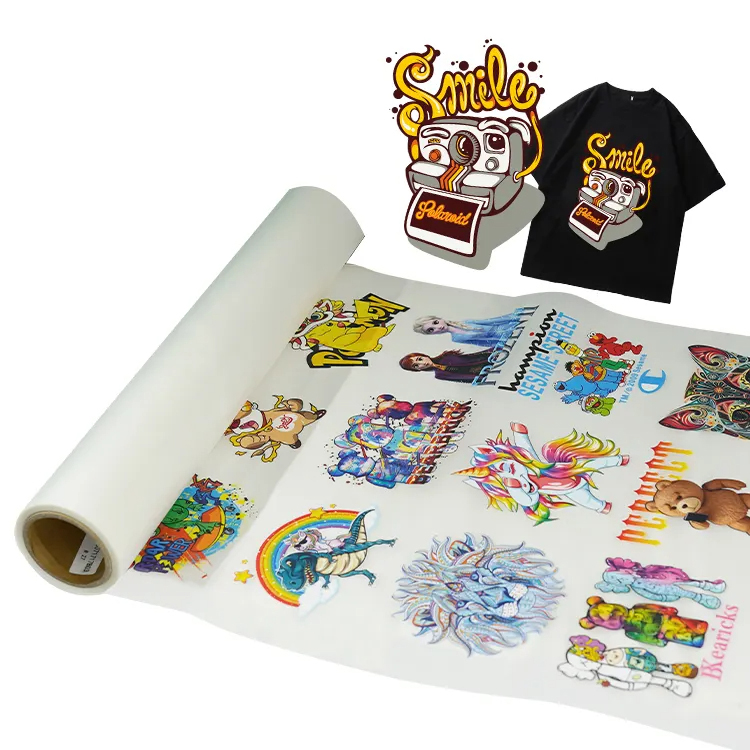
Why similar prints behave so differently (and what it costs)
Why does one “identical” run glide through the press while the next one bleeds time and rupees, no? In a Pettah shop in July, a DTF Film lot drifted 0.6 mm across 200 transfers—how many returns can you afford before the math turns ugly? I’ve spent 17 years in B2B supply for apparel decorators, from Ratmalana to Katunayake, and I keep seeing the same blind spot: we judge by a sample swatch, not by stability over volume. When you pick a dtf film manufacturer, you’re not just buying plastic and coating; you’re buying yield. I learned that the hard way in 2022 when a “bargain” film gave us 13% reprints on a 500-tee job—cold peel stuck, adhesive powder under-cured, and the release liner tore like papadum. That design genuinely frustrated me because the press crew did nothing wrong; the PET gauge and release force were off, and quality drift showed up only after 100 sheets. Let’s shift from price tags to outcomes.
Here’s where I start putting numbers to behavior—so we can compare apples with apples.
Under the hood: the real blockers when choosing a supplier
Let me get precise. Film performance lives in a triangle: PET base (gauge and flatness), coating (release and ink anchoring), and powder-press harmony (adhesive melt window vs. cure). If a film’s coating has inconsistent release force, hot peel becomes a gamble; if the anti-static layer is weak, you’ll see dust, then pinholes. I still have a note from 18 August 2023, Katunayake line 2: 75 µm film, nice gloss, but ink saturation required +8% white underbase to avoid lift-off—extra pass time = 26 minutes on a 300-sheet block. That delay cost LKR 42,000 in overtime and freight juggling. The traditional “solve” is to slow the dryer or raise press temp, but that only hides the mismatch. Real fix is to spec the melt window to your tunnel profile and keep registration drift under 0.3 mm across the stack.
What slips through QA?
Two things, often. First, batch-to-batch variability. A supplier can nail lab sheets, then ship a lot with uneven coating thickness—micron shifts that you won’t see till the fifth tray. Second, humidity sensitivity. We ran one brand during the Southwest monsoon; at 78% RH, the liner curled just enough to skew feed, and we lost the left edge of numbers on school jerseys. No worries, the vendor said—add more powder. But more powder raised the hand feel and clogged detail around serifs. That “fix” made the garment worse. I’d rather pay a steadier rate for a stable release liner and predictable peel than save a few rupees and fight ghosts.

Looking ahead: comparing specs that actually predict yield
What’s Next
We’ve seen how small mismatches grow into reprints. Now I prefer a sharper comparison that blends lab spec and floor proof. It’s not about finding the “best” film in a vacuum; it’s about matching your press rhythm, humidity band, and ink laydown to a dependable dtf film manufacturer—one that treats batch stability like a contract. I use a two-week trial with mixed art: fine fonts, block fills, and gradients. Then—silence. We let the shop run as usual and capture scrap codes automatically. The winners don’t scream on day one; they stay boring on day ten. From there, I stack decisions using three clean metrics you can audit without drama:
– Peel reliability at real speed: Track hot peel/cold peel success rate at your target conveyor pace (not the vendor’s). Aim for 98%+ with no edge lift on 200 consecutive pulls.
– Registration stability over volume: Measure drift across a 250-sheet stack; hold under 0.3 mm on both X/Y with no curling-induced skew.
– Powder and cure harmony: Confirm your adhesive powder weight and tunnel profile produce full bond at a single pass; no cold spots, no grainy feel, and no extra white underbase needed.
If you anchor decisions to those three, scrap falls, overtime shrinks, and customer complaints stop nibbling your margins. We saw a 9% scrap drop on a midweight jersey line once we normalized peel force and ink anchoring—simple, boring, profitable. I firmly believe that a clear spec plus a quiet factory is a fair sign you’ve picked right, and if your team sounds calmer on WhatsApp by week two, that’s data too. Credit where due: steady partners like Xinflying make that calm possible without showy promises.