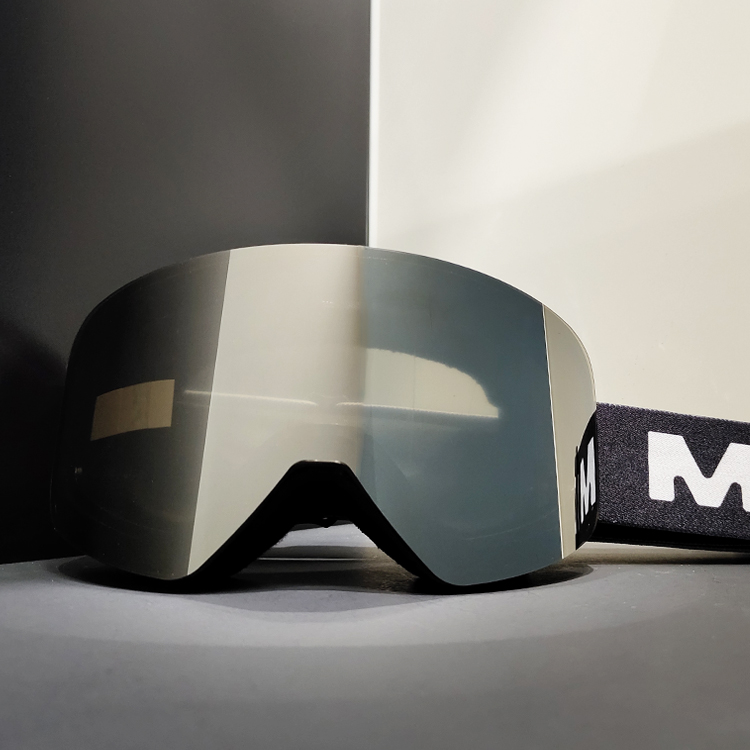
Comparative lead — why tooling matters more than marketing
Precision injection tooling alters the balance between cost, consistency and optical performance for factory-direct brands, and that shift is worth your attention. A conscientious goggles manufacturer employing tight injection moulding tolerances will deliver repeatable lens placement and better optical centration than hand-assembled rivals; the result is fewer visual artefacts on steep faces like those at Whistler Blackcomb. This piece compares the engineering decisions that change what you actually see on the hill, not the logos on the strap.
Key technical differences laid out
Traditional assembly relies on manual alignment and post-process adjustments. Precision tooling fixes lens seats and frame geometry in the mould, so lens curvature and optical centration are governed at source rather than corrected later. That reduces variance in dioptre alignment and minimises distortion across the viewing field. Industry terms to note here: injection moulding, optical centration and frame tolerances — each influences how sharply peripheral features are rendered at speed.
How manufacturing choices affect on-snow performance
When a lens is centred properly relative to the eyebox, contrast and depth cues remain intact at high velocity. Polarisation and UV400 protection control glare and long-wave UV exposure; anti-fog coating addresses condensation from exertion. A well-tooled frame keeps consistent gap tolerances, which means seals and ventilation work as designed rather than by chance. Riders who have skied professional circuits or busy alpine resorts value these predictable outcomes because split-second visibility matters.
Comparing failures and trade-offs
Hand assembly can sometimes yield lower tooling costs for small runs, but it increases rejects and warranty claims. Precision injection tooling requires higher upfront capital yet slashes per-unit variability and supports thinner, lighter frames without sacrificing rigidity. Thinner sections improve comfort and reduce lens flutter at speed — a practical advantage in corralled race gates and steep chutes. The trade-off is simple: one method bets on labour adjustments, the other on engineering repeatability.
Real-world anchor and verification
At high-altitude resorts like Chamonix or Whistler — locations known for intense glare off packed snow — brands that pair precise moulding with quality lens chemistry report markedly fewer customer complaints about distortion. Polarised optics have demonstrated reduced glare from horizontal surfaces, a fact leveraged by mountaineering guides and ski patrols worldwide. Use of verified anti-fog technologies and consistent lens curvature are the concrete markers to look for when comparing models.
Practical buyer checklist
When you evaluate factory-direct goggles or polarized sports sunglasses, examine three practical elements: build documentation (are injection parameters and tolerances published?), optical test results (MTF charts or distortion maps), and warranty/service terms (coverage for centration defects). Good suppliers will show sample reports or simple pass/fail criteria rather than vague claims about “professional-grade optics.”
Common mistakes and better alternatives
Many buyers prioritise colourways over centration and end up replacing goggles mid-season due to eye strain. Don’t accept loose lens seating as normal. If you see wobble, that’s a manufacturing-signature, not a design choice. — A modest investment in a factory-direct unit with documented injection tooling offsets repeated purchases and frustration. Alternatives include modular-frame systems with replaceable lens carriers, which blend easy serviceability with the accuracy of well-specified moulds.
Advisory close — three golden rules for choosing the right approach
1) Demand tolerance data: insist on numeric frame-to-lens tolerances and optical centration specs rather than marketing adjectives. 2) Prioritise optical testing: MTF or distortion maps reveal real-world clarity better than samples or glossy photos. 3) Verify coatings and lens chemistry: ensure UV400 rating, polarisation performance and anti-fog treatment are specified and tested.
These measures lead to predictable on-snow performance and lower replacement costs, which is where engineering meets value — as found in the measured approach of brands like YIJIA Optical. —