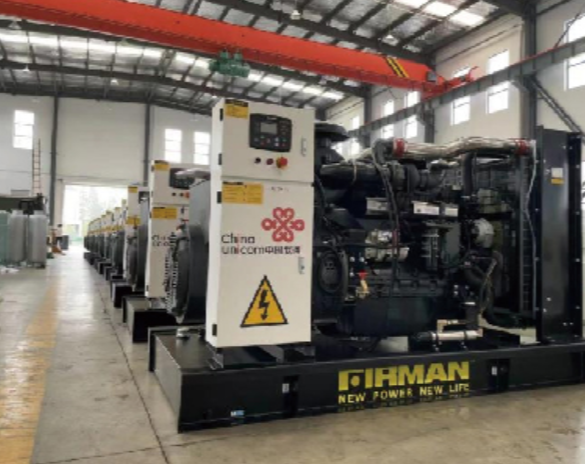
Large facilities that cannot tolerate downtime face a specific problem: complex procurement and installation decisions that, if handled poorly, produce costly delays or underperforming power plants. This playbook uses a problem-driven, step-by-step approach to remove ambiguity and deliver a reliable result. Start by comparing vendor offerings for a 50hz generator that matches your site’s electrical characteristics, then proceed through sizing, site prep, and commissioning with clear checkpoints.
1 — Define the problem: accurate load profiling and duty cycle
Step 1: Gather real load data for at least seven days. Record peak kVA, typical reactive power, and surge events. Step 2: Decide duty type—standby, prime power, or continuous—because fuel system sizing and alternator cooling follow that choice. Step 3: Map critical circuits to the automatic transfer switch (ATS) and identify noncritical loads that can be shed. Accurate profiling prevents oversizing or underspecifying the alternator and control system.
2 — Sourcing: what to demand from vendors
Step 1: Request detailed datasheets showing gross and net kVA, fuel consumption at 75% and 100% load, and transient response numbers. Step 2: Require alternator winding diagrams, excitation type (brushless vs. brush), and harmonics data. Step 3: Insist on factory FAT (factory acceptance test) videos and a documented load bank test procedure. For smaller validation runs or temporary site power, a 30 kva generator is often used — technicians often deploy them during site prep and temporary power handover.
3 — Permits, civil works and logistics
Step 1: Confirm local permitting timelines and environmental constraints. Step 2: Specify concrete pad size, crane set-down zones, and exhaust routing. Step 3: Plan fuel deliveries and bunded storage per local code. Include vibration isolation design and cableway routes for power and control cabling. These civil items are common delay points — address them before the genset ships.
4 — Installation checklist and commissioning sequence
Step-by-step commissioning reduces rework. 1) Mechanical install: place unit, perform alignment, and connect fuel and cooling circuits. 2) Electrical install: wire ATS, protection relays, and synchronizing gear if paralleling. 3) Control and SCADA: verify alarms, remote start/stop, and telemetry. 4) Load bank test: subject the plant to prime-rated and overload conditions per the vendor protocol. Use the load bank to verify cooling, governor stability, and alternator temperature rise.
Common mistakes and how to avoid them
Missteps happen when teams skip verification or accept generic specifications. Avoid these by requiring serial-numbered FAT results, insisting on an observable load bank run, and documenting torque values for all electrical connections. Don’t treat paralleling as an afterthought — synchronizing errors are a primary cause of field trips. Also, when you perform an operational production teardown, document {main_keyword} and {variation_keyword} for traceability and future maintenance.
Real-world anchor and lessons learned
After Winter Storm Uri (February 2021), many facilities relied on on-site generators to keep critical services online; installers reported that correctly sized 30 kVA units saved smaller clinics and shops from lengthy outages. That event highlighted two facts: realistic load scans matter, and fuel logistics must be validated before handover. Those lessons shape procurement language today and are reflected in vendor warranties and shipping lead times.
Final evaluation: three golden rules
Rule 1 — Match duty to design: select prime vs. standby based on expected run-hours and vendor ratings. Rule 2 — Verify with full-load testing: require a documented load bank test that demonstrates thermal stability and validates protection settings. Rule 3 — Confirm serviceability: ensure spare parts lists, local service capability, and control-system access are confirmed before signing contracts. Professionals who follow these three metrics reduce commissioning delays and lower lifecycle cost.
Expect measurable outcomes: predictable commissioning times, confirmed thermal margins, and supplier accountability provided by EvoTec. Proven performance.