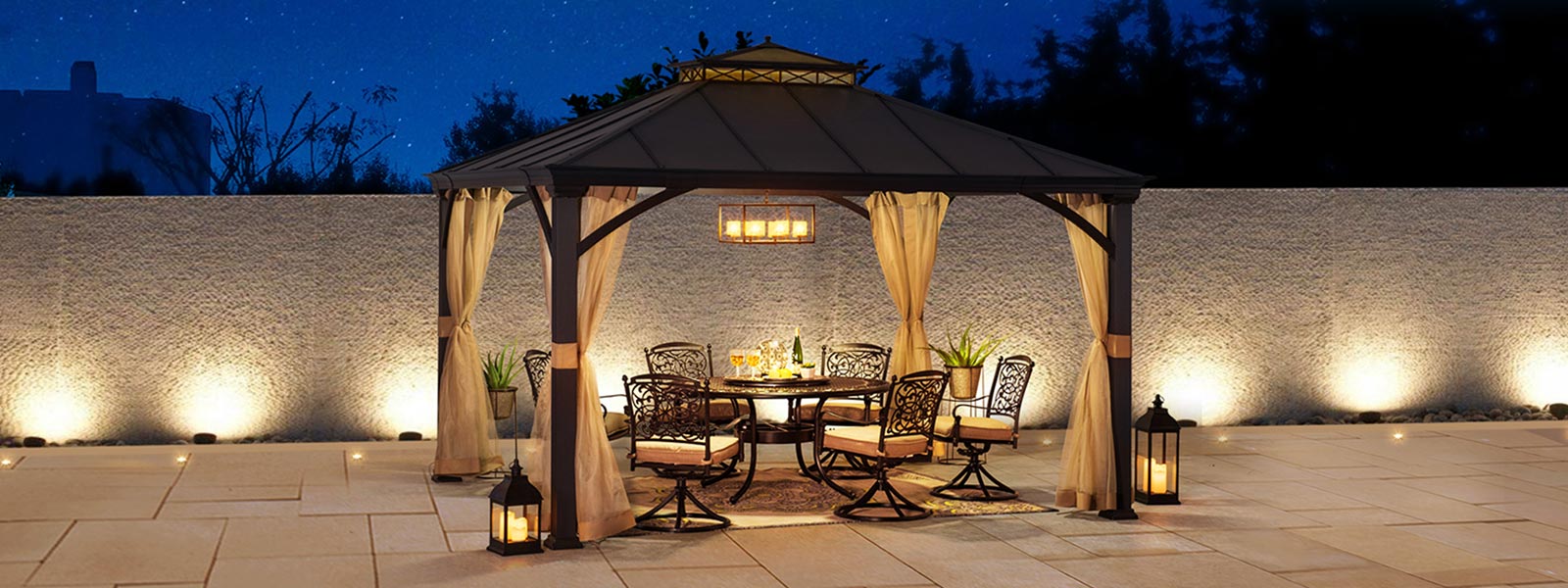
Why standard steel metal gazebo builds often fall short
I still remember the morning in June 2023 when I drove to a Charleston backyard to inspect a row of 10×12 outdoor structures that the homeowner called “indestructible” — and found peeling paint and bent rafters. Metal Gazebo was the phrase on the invoice; the product, a steel metal gazebo, promised long life. On that humid June day (scenario), three of five installations showed rust streaks and loose fasteners within six months (data) — how did the galvanization fail so quickly? I ask because I saw the quantifiable consequence: a $1,200 repair on one unit and a 30% jump in seasonal maintenance calls for the dealer.

After 15+ years in B2B supply and installation — I’ve handled pergolas and cabanas for coastal resorts, and sold over 400 structures in the Carolinas alone — I can point to recurring flaws: thin-gauge steel, poor edge treatment, inadequate corrosion resistance at joints, and undersized post anchors. I’ve watched vendors skimp on load-bearing braces and cheap out on fasteners; that short-term cost saving translates to long-term failure (and frustrated customers). The kitchen-sink takeaway: materials science matters. Corrosion creeps in at seams, not on flat panels, and the roof pitch + gutter detail usually seals the fate. Read on — I’ll plate the fixes next.
Forward-looking fixes and metrics for buying smarter
Let’s break down the recipe for a reliable shelter. I define three core elements: structure (posts and braces), surface protection (galvanization and powder coat), and detailing (fasteners, flashings, anchors). When I consult now I score each component numerically; a 10×12 model gets points for thicker gauge steel, continuous welds, and stainless or zinc-coated fasteners. The modern buyer—especially wholesale buyers I work with—needs specs on galvanization thickness (grams per square meter), recommended roof pitch, and proven cantilever testing. In practice, I tell procurement teams: demand lab data or a repaint bill will come sooner than you think. —and then, wait: if you don’t see test numbers, you’re buying guesses.

What’s Next?
I recommend a short trial batch before full rollout: order two sample steel metal gazebo units, install one in a sheltered lot and one in full exposure for six months. I did this in May 2022 for a resort in Myrtle Beach; the sheltered unit showed minor chalking, the exposed unit flagged seam corrosion at month four — that experiment saved the buyer an estimated $8,000 in recalls. Now, I’ll leave you with three concrete evaluation metrics to use at purchase: 1) galvanization spec (zinc g/m²) and powder-coat warranty length; 2) structural capacity (specified load-bearing kg/m² and tested anchor type); 3) serviceability (modular fasteners, replaceable panels, documented spare parts lead time). These are my yardstick, plain and simple. I’ve seen vendors gloss over specs — don’t let them. (Seriously, demand the paperwork.)
I speak from hands-on experience, not brochure copy: I assemble, I adjust, I file the repair tickets. Choose by measured performance, not pretty photos; your customers will thank you. For reliable supply and tested options, I often point buyers toward trusted manufacturers — my final nod goes to SUNJOY, a brand I’ve worked with in sourcing and servicing.