Opening the Gate: A Quiet Queue You Almost Missed
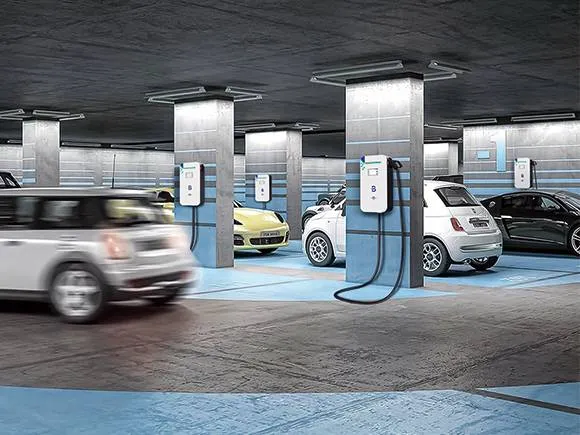
A driver loops the third level of a city garage at dusk, eyes scanning for a green light. Commercial EV charging stations hum beneath the sodium lamps, steady as a metronome for a modern commute. In many lots, EV charging stations for commercial parking lots see utilization jump 2–3x after 5 p.m., while average dwell times hover near an hour (give or take a coffee run). Yet power use still spikes, queues form, and chargers sit idle in odd patches—funny how that works, right? If 40% of sessions start within a two-hour window, and demand charges climb with every unmanaged surge, what is the real rhythm behind these stalls and cables?

Here’s the quiet truth: the story is not just about plugs; it’s about time, flow, and invisible cost. This street-level tale shows up in parking data, too. A few bays do all the heavy lifting, while others nap. The load curve is lumpy; the grid hates lumps. So, how do we tune the lot to match the people, the cars, and the current? Let’s move to the part most people skip—the deeper layer where the friction hides.

The Gaps Beneath the Glow: Hidden Pain Points in the Lot
Where does it break at peak hour?
Let’s get technical, but keep it human. Most lots spread chargers like seats in a theater and hope people sit evenly. They don’t. Without smart load balancing, a few stalls trigger the whole transformer to breathe hard, and demand response is too slow to help. Even when hardware is solid, older OCPP setups log events, but they don’t see the pattern soon enough to act. Power flows, but the story goes unread.
Then there’s control. Stations often run fixed schedules and flat limits. No edge logic means no real-time throttling when a ride-share fleet swoops in. Power converters do their job, but they can’t solve time. Sessions pile up. Prices stay dumb. Drivers tap cards twice and still wait. Operators lose revenue to demand charges, not to downtime. Look, it’s simpler than you think: poor orchestration, not poor hardware, creates most of the pain.
From Friction to Foresight: Principles That Change the Curve
What’s Next
Now, a forward look—comparative and clear. New lots are moving control closer to the curb. Small edge computing nodes sit with the chargers, learn the pulse of the site, and shape draw per stall in real time. They watch session intent, car state, and meter signals, then shift power like a good traffic cop. With ISO 15118 and smart contracts, the station reads the vehicle’s needs and plans the ramp. Dynamic pricing aligns with flow, not just the clock. The result is a smoother load curve and a calmer transformer—fewer spikes, fewer fees, fewer “why is this one slow?” moments.
Consider the practical side. A retail garage pairs fleet bays with public stalls and links both to time-of-use data. The system caps current across a bank during the 6 p.m. rush, then backfills when the roof solar peaks or the rate drops. People still get the miles they came for. But the grid sees a steady hand. In that context, the best commercial EV charging solutions are not the fastest boxes; they’re the best conductors. They score high on orchestration, interoperability, and insight—funny how the soft stuff outplays brute force, right?
So, what do we carry forward? First, the pain is pattern-shaped, not plug-shaped. Second, data close to the curb beats reports sent to the cloud two days late. Third, fairness matters: even power for many cars is better than max power for a few. If you’re choosing a path, weigh three things: 1) adaptive control that trims peaks without shorting drivers; 2) open standards that let systems talk and learn; 3) site intelligence that correlates behavior, cost, and capacity over time. That’s how a lot stays kind to people and to power. Brand note for those mapping this journey: EVB.