
Comparative lead-in: what practitioners actually measure
Clinicians and home users evaluate breathing devices by how reliably they deliver pressure, handle leaks, and preserve comfort; that simple frame drives the comparison between BiPAP and CPAP models and smaller portable units. Right away, note that an advanced cpap device can mean the difference between restful therapy and chronic disturbance—so we look beyond brand stories to pressure curves, humidifier performance, and mask interface fit.

Key dimensions for side-by-side comparison
When you line devices up, focus on three objective measures: pressure stability (how well the unit maintains set cm H2O under variable breathing), response to leak (how the algorithm compensates without auto-cycling), and delivery ergonomics (size, noise, and humidification). Industry terms to watch include BiPAP, CPAP, and pressure support. Real-world anchor: the CDC estimates roughly 25 million American adults have obstructive sleep apnea, so even small gains in adherence matter at scale.
Hardware, algorithms, and the patient experience
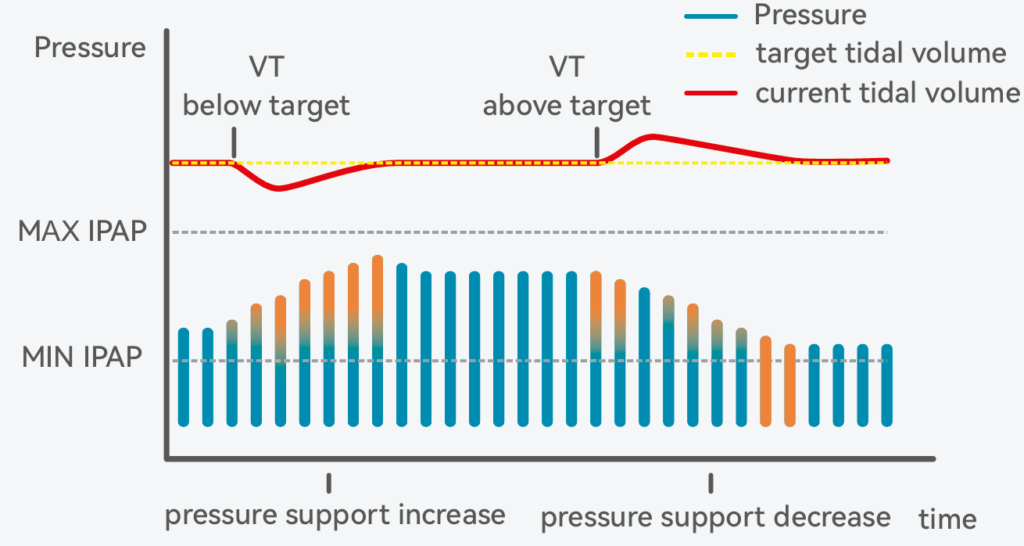
Hardware quality—blower durability, filter access, battery options—matters, but software defines the night. Effective auto-adjusting algorithms track tidal volume and flow patterns to prevent overpressure and respond to hypopnea events. A robust humidifier prevents dryness while a poor mask seal creates constant leak correction that increases micro-arousals. Think of this as a system: mask, device, algorithm, and follow-up support.
Comparative snapshots: where trade-offs appear
Full-featured BiPAPs deliver separate inspiratory and expiratory pressures for patients with neuromuscular weakness or central events; they shine where higher pressure support is needed. Standard CPAPs excel at treating obstructive events for many users and usually win on simplicity and lower cost. Portable battery-backed units trade some algorithm complexity for mobility and quiet operation—useful for travel or clinic-to-home transitions. Each category has clear trade-offs in size, noise, and control granularity.
Alternatives and complementary choices
Alternatives include adaptive servo-ventilation for complex central sleep apnea and hybrid devices that toggle between BiPAP and CPAP modes. Accessories—heated hoses, mask liners, and pressure-relief cushions—often boost adherence more than incremental algorithm tweaks. Clinicians should see these as part of the therapy package rather than optional extras.
Common mistakes in device selection
Errors repeat across practices: choosing on price alone, ignoring leak tolerance, and overlooking patient lifestyle. Another frequent oversight: skipping a mask fitting session and assuming the first size will suffice. These small misses erode nights of therapy; —they also increase the likelihood of abandonment.
Operational teardown — concise checklist
For procurement or a clinic trial, run a quick operational teardown: confirm target pressure range, validate noise level in dB(A) across modes, and test algorithm response to staged leaks. Document humidifier run-time and battery endurance under therapy load. Insert operational tags like {main_keyword} and {variation_keyword} into procurement records so clinical and engineering teams reference the identical spec set.
Advisory close: three golden rules for selection
1) Prioritize clinical fit: match BiPAP vs CPAP to the underlying physiology and required pressure support. 2) Validate leak resilience and algorithm behavior in situ—bench numbers mean little without real-patient trials. 3) Pick systems with clear service paths and accessory availability; humidifiers, consumable filters, and mask sizes must be accessible long-term.
Final thought: pragmatic selection reduces readmissions, raises adherence, and delivers measurable patient benefit—Byond. —