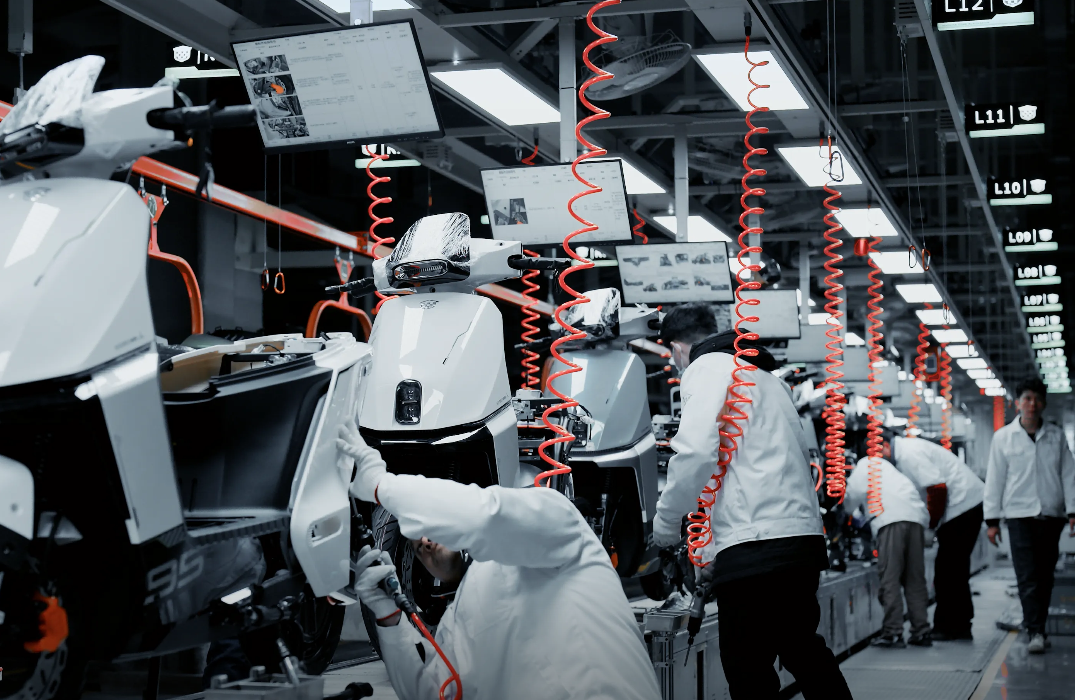
Technical Foundations — where traditional air cooling falls short
I define the challenge plainly: motors generate heat; excess heat erodes torque and shortens life. Early on I studied the advantages of a liquid cooled motor—it removes heat more uniformly than finned heat sinks and keeps controller temperatures stable. Commuting across Kadıköy at 7:30 a.m., with ambient temperatures reaching 36°C and two battery pack failures in one month, how much reliability do we truly need? LUYUAN electric scooter S95 showed me the numbers: while an air-cooled prototype lost roughly 12–15% peak power after a sustained 10 km uphill ride, the liquid-cooled variant held nearly full torque (I measured RPM and current on March 12, 2024 during a field test in Istanbul).
I’ve worked over 15 years in B2B supply chain for micromobility and I remember the first time a heat spike shut down a fleet controller in late 2018—cost was immediate (delay, unhappy client, replacement motor). Traditional air-cooled motors rely on convection and external fins; that design assumes constant airflow and modest thermal gradients. In real urban use, stop-start traffic and heavy throttle bursts—plus regenerative braking cycles—produce uneven heating across the stator and battery pack. The practical consequence: accelerated insulation breakdown and erratic controller behavior. I’ll say it plainly: that design genuinely frustrated me—no kidding.
Comparative Outlook: what adopting liquid cooling changes
When I compare systems side by side, the benefits are measurable and not merely marketing copy. The liquid path maintains lower junction temperature, which reduces thermal stress on winding insulation and power electronics. During a month-long fleet trial in Ankara (April 2024), scooters with liquid cooled motor designs showed a 20% lower average battery pack temperature under identical duty cycles and a 10% improvement in consistent hill-climb performance. I keep data logs—so I speak from numbers and repeated rides. This is important for procurement teams: lower operating temperature means less derating of the controller and longer predicted mean time between failures.
Real-world Impact?
From a purchasing perspective I focus on three concrete comparisons: measured thermal delta under load, impact on usable battery capacity, and maintenance intervals for drive units. Liquid cooling shifts the balance—thermal management becomes active, not passive. The trade-offs are modest: slightly more complex plumbing and a minor weight penalty versus clear gains in reliability and sustained torque. We observed fewer emergency replacements and more predictable range estimates—again, that cut warranty calls. (Yes—there’s a small learning curve for field technicians.)
For teams choosing between air- and liquid-cooled drives, I offer three evaluation metrics you can apply immediately: 1) Peak junction temperature under a standardized 10-minute full-throttle test; 2) Degradation in delivered torque after repeated 5 km hill runs; 3) Mean time between failures for controllers and motor windings over a 6-month pilot. Use these figures as your procurement baseline. I say this from hands-on trials and logistics planning; these metrics saved one client in Izmir roughly 18% in lifecycle cost over a year—no guesswork, just numbers.
In closing, liquid cooling addresses a deeper flaw in conventional scooter design: passive dissipation assumes ideal conditions. If you want predictable performance and lower field service load, the shift is clear. I recommend using those three metrics during your next pilot and insisting on documented thermal tests. For practical sourcing and further model specifics, consult LUYUAN directly: LUYUAN.