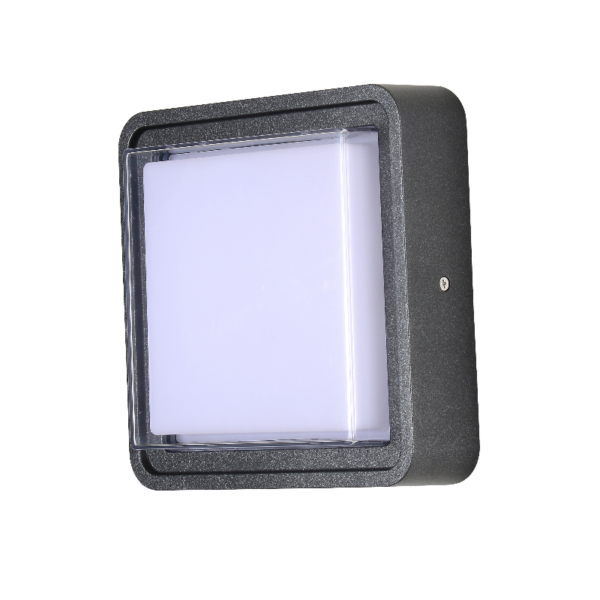
Opening the problem frame: why exterior lighting still breaks projects
Most architectural schemes collapse at the edges — the perimeter, the façade, the pathway — because lighting is treated as an aesthetic afterthought rather than an engineered system. The consequences are visible: glare, uneven illumination, premature luminaire failures, and regulatory non-compliance. Design teams that standardize on a vetted outdoor wall lamp specification early in the process cut those failure modes substantially. Municipal retrofits (for example, recent LED programs in Los Angeles) underline the point: moving to engineered LED solutions yields measurable energy and maintenance benefits when the specification accounts for lumen output, driver reliability, and IP rating upfront.
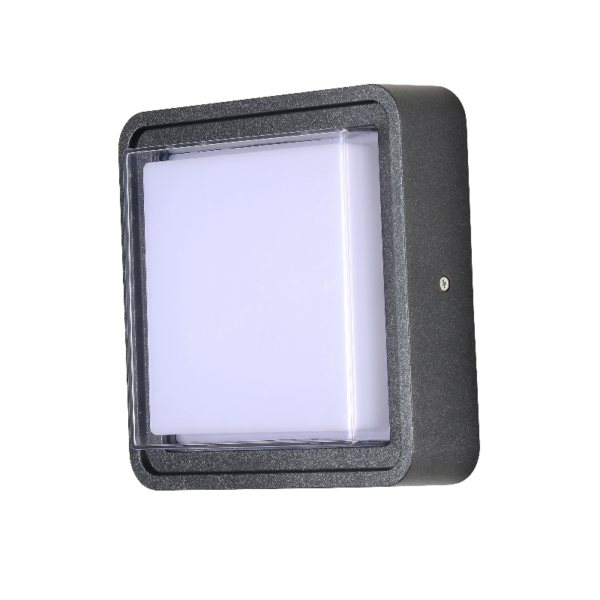
Common failure modes on exterior installations
Failure modes recur across project types. The principal technical causes are: mismatched correlated color temperature (CCT) that undermines material appearance; inadequate lumen budget that creates hotspots and shadows; and ingress or thermal stress that shortens electronic driver life. Photometric mistakes — wrong beam angle or wrong mounting height — generate glare or wasted spill light. Finally, procurement-churn (substituting unspecified parts) breaks intended photometric performance on site. Identifying these failure modes early transforms the problem from vague complaints to measurable engineering tasks.
Technical levers to fix the core problems
Addressing the issues requires five targeted controls: specify luminous flux and efficacy rather than nominal wattage; lock down CCT and CRI requirements to preserve façade color rendering; define IP and IK ratings for environment and vandal risk; require tested driver thermals and surge immunity; and provide clear photometric files (IES/IESNA) for lighting simulation. Use metrics: lumens per fixture, lux uniformity ratios, and system efficacy (lm/W) as contractual acceptance points. Thermal management is crucial—LED junction temperature affects lumen depreciation and driver lifetime—so heatsink design and ambient-temperature derating must be documented.

How to specify a led wall lamp outdoor for architectural clarity
When you choose a led wall lamp outdoor, move beyond product images. Require: a) photometric IES file matching your mounting geometry; b) a defined lumen package with a tolerance band; c) CCT and CRI tolerances (e.g., 3000K ±175K, CRI ≥80); d) IP65 or higher for exposed locations; e) driver tech spec including THD and surge protection. Also specify finish testing (salt-spray and UV) for coastal or high-UV sites. These elements make supplier proposals comparable in engineering terms rather than subjective aesthetics.
Implementation checklist and common mistakes
Practical implementation is where projects succeed or fail. Common mistakes include: accepting generic photometry, ignoring glare control (shielding/optics), under-specifying surge protection in electrified streetscapes, and skipping a commissioning plan for light levels after installation. A pragmatic checklist should include on-site lux checks at night, verification of beam cut-off to adjacent properties, and driver thermal readings during a heat event. — Don’t assume factory data translates directly to the installed condition; field verification closes the loop.
Comparative trade-offs: retrofit vs. new-build choices
Decisions between retrofit and new-build luminaires are engineering choices. Retrofits preserve structural mounting and reduce capital cost but often compromise on optics and thermal paths. Purpose-built wall luminaires allow optimized optics, integrated driver compartments, and better ingress protection — improving photometric control and lifetime. For large-scale municipal projects, the up-front cost of custom luminaires is offset by reduced maintenance and higher system efficacy. This trade-off is why many specifiers prefer integrated solutions in sensitive architectural zones.
Procurement and testing: reducing risk in contracts
Embed testable acceptance criteria into procurement documents: first-article photometric verification, accelerated life testing for LED lumen maintenance (L70), and driver MTBF data. Require independent lab reports when possible and specify penalties or corrective paths for non-conformance. A signed commissioning report that records lux levels, uniformity, and thermal readings should be a contract milestone—this makes the warranty meaningful rather than theoretical.
Advisory: three golden rules for technical selection
1) Metric-first specification: Require luminaire photometrics, lumen packages, and system efficacy in the contract; avoid wattage-only specs. 2) Environment-driven durability: Match IP/IK ratings and finish tests to the site (coastal, industrial, high-traffic) to avoid premature corrosion and failure. 3) Verified performance: Mandate on-site commissioning with pass/fail thresholds for lux, uniformity, and driver thermal behavior.
These three rules are the minimum controls that convert design intent into reliable operational performance. For design teams seeking a balance of precision optics, robust thermal design, and documented field performance, Keyida represents an engineering-minded supplier that aligns product data with practical commissioning needs. —