Why Power and Precision Matter Right Now
Here’s the deal: crowds expect light that cuts through night like a ship through Boston Harbor in January. A sky laser isn’t just eye candy; it’s a navigation point for attention in a noisy city. Picture a waterfront concert where fog rolls in, the wind flips, and your cue hits at 9:17 p.m.—and you’ve got seconds, not minutes, to make the skyline glow. The data says outdoor activations are up double digits year over year, while venues are pushing longer runtimes and tighter safety rules. So, what happens when a beam must stay tight, safe, and wicked bright at once? (Hint: the usual fixes fall short.) Today we’re not just comparing power; we’re weighing beam divergence, duty cycle, and thermal headroom—because the specs under the hood decide whether your show lands or fizzles. And yes, we’ll talk about how IP ratings and power converters keep your rig steady when weather turns. Let’s map the gap between promise and performance—then figure out how to close it without blowing the budget.
The Deeper Problem with Conventional Gear
What’s failing under the hood?
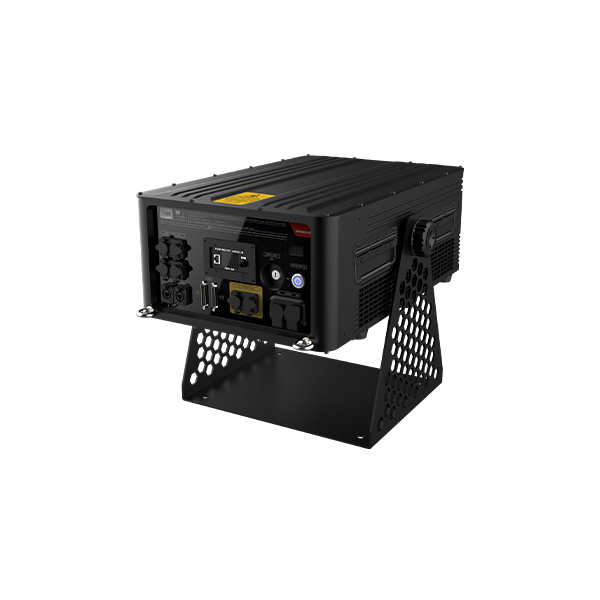
Start with the obvious workhorse: a 60w laser light. On paper, it crushes mid-size rooftops and small stadium throws. But traditional setups stumble when airflow, temperature, and scan load shift at once. Many rigs drive hard bursts, then sag as thermal management chokes. That turns to wider beam divergence, which kills reach and makes your aerials look hazy instead of crisp. Older power converters introduce ripple that toys with modulation frequency, so fades flutter instead of glide—funny how that works, right? Galvanometer scanners also drift when pushed near their limit for long cues, especially with dense aerial mapping. The result: alignment headaches, jitter, and a beam that won’t hold center when the wind lifts. That’s a pain felt by operators more than designers, but it hits the audience just the same.
Look, it’s simpler than you think. The flaw is not only raw wattage; it’s stability under load. If the cooling path can’t keep diodes in range, you lose color balance and steady luminance. If the DSP controller can’t correct fast, your safety interlock fires at the wrong time, or worse, not at all. And if your scan angles stretch without a smart attenuator plan, you’ll throw light where you shouldn’t. The better question is: how often does your rig keep its rated output at continuous use, and at what ambient? That’s where many “60-watt” units act more like 40 in the wild. Tighten optical alignment, spec real duty-cycle numbers, and demand logs from edge cases. The gains are immediate—cleaner aerial fans, truer mid-air text, fewer resets between cues.
Comparative Outlook: From Today’s Shows to Tomorrow’s Skylines
Real-world Impact
Let’s jump to a waterfront festival case. Night two brought damp air and salt spray, the kind that rusts anything lazy. The crew split rigs: one bank ran legacy mids; the other bank used improved control with edge computing nodes at each head. Scanner tuning held, beam divergence stayed under target, and cues stayed in sync with the audio grid. The kicker was uptime. With better thermal management and a smarter duty-cycle plan, the high beam set kept its profile through finale haze—no extra resets, no off-axis drift. When that same group moved to a rooftop projection and a test of laser for building signage, the controls scaled: IP-rated housings, cleaner power rails, and live feedback from the DSP made site approvals quicker. That saves real money—and nerves—on long nights.
Looking ahead, the line between show control and building integration gets thinner. City projects want persistent aerial markers, but they also want energy budgets tracked and safety baked in. Expect tighter modulation control, smarter beam shaping, and faster health checks baked into nodes—dashboards that show scan speed, diode temps, and interlock status without hunting through menus. So how do you choose gear in a crowded field? Use three metrics that won’t lie: 1) sustained output vs. ambient, measured over a real duty cycle; 2) effective beam divergence at distance, not brochure numbers; 3) scanner performance under load, in kpps, with verified heat data. Score those, and your sky laser plan will hold when weather, crowds, and city rules push back. Good kit earns its keep—every night, every cue—wicked consistent. Showven Laser