Comparative lead-in
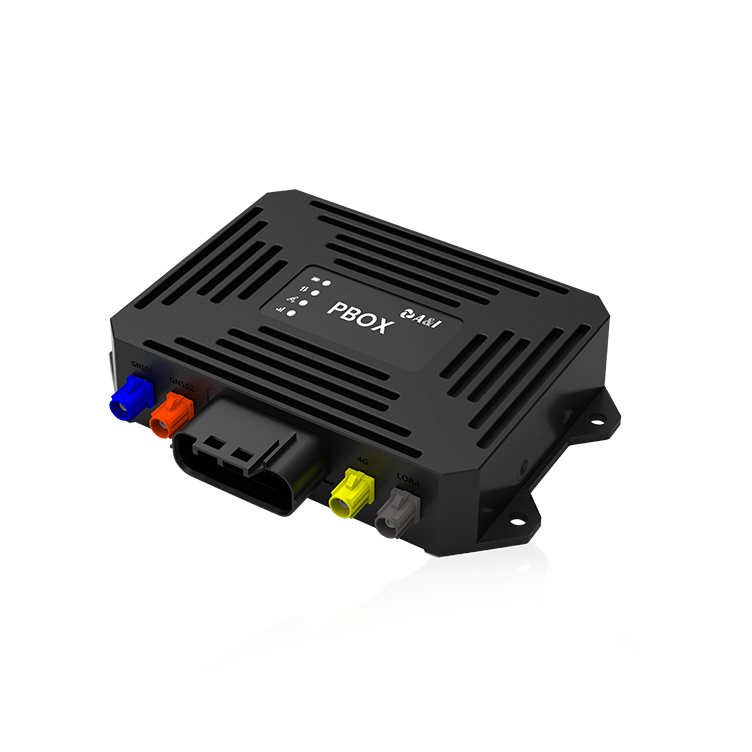
Factory-direct precision agriculture firms now apply miniature sensors and tight supply chains to farm tasks in ways that legacy inertial systems—like fiber-optic gyros—simply weren’t built to match. This matters for on-the-ground tools such as the automatic weeding robot, which pairs low-cost MEMS sensing and RTK GPS corrections to reduce chemical use and soil disturbance. The shift is practical and environmental: smaller, cheaper electronics lower barriers to adoption while enabling field-level autonomy and targeted action.
Where the advantage comes from
Factory-direct outfits design around production realities. They specify brushless motors, rugged chassis, and simple actuator networks that integrate readily with off-the-shelf LiDAR and GPS modules. That reduces component lead times and allows frequent firmware updates. In contrast, systems built around fiber-optic gyros excel at high-end stabilization but carry higher unit cost and maintenance complexity, which hurts adoption for routine agricultural tasks like row cultivation or slope mowing.
Real-world anchor and use cases
Across California’s Central Valley, growers increasingly use compact autonomy to manage steep rows and tight plots. Tracked machines—durable, low-ground-pressure platforms—have proved useful on erodible slopes and in vineyards. A tracked design combined with simple autonomy often beats a gyro-stabilized platform when the priority is coverage, cost, and reduced soil compaction. For operations that prioritize slope safety and traction, a remote control mower with tracks can be both safer and more economical than heavier, gyro-reliant machines.
Technical trade-offs in plain terms
MEMS sensors bring acceptable accuracy for path-following, and when augmented by RTK GPS and periodic visual landmarks they support precise row work. Use of LiDAR and camera-based perception improves obstacle detection without the calibration burden of high-end inertial systems. The trade-off is that MEMS require algorithmic compensation for drift; yet that compensation is increasingly effective and far cheaper to maintain.
Common mistakes and practical alternatives
Buyers often overspec by chasing the highest-spec inertial tech rather than matching tools to tasks. That leads to oversized machines that compact soil and consume more power. Instead, choose platform size to minimize ground pressure and prioritize modular components for field serviceability—swappable batteries, standard connectors, and open firmware. —A small programmatic change in the field can cut downtime by days, not hours. Alternatives include retrofitting existing mowers with autonomy kits or selecting factory-direct robots that bundle sensors and support under a single purchase channel.
Cost, maintenance, and environmental impact
Factory-direct models lower lifecycle costs through simplified spare parts and remote firmware fixes. Maintenance on brushless motors and sealed gearboxes is straightforward compared with periodic calibration or replacement cycles of fiber-optic gyros. Environmentally, lighter platforms and targeted weeding reduce herbicide volumes and fuel use, which aligns with the growing regulatory and market pressure in regions like California where soil health and runoff are front-of-mind.
Advisory: three golden rules for procurement
1) Match accuracy to task: prioritize RTK GPS plus visual odometry for row-level work; reserve high-end inertial units for precision stabilization tasks only where truly needed. 2) Evaluate service paths: prefer factory-direct models with modular parts, local support options, and remote update capability to avoid long lead times. 3) Measure footprint and traction: select low-ground-pressure tracks or wide tires to protect soil structure and reduce erosion risk.
Factory-direct precision firms simplify these choices by aligning design, manufacturing, and support—so operators spend less time repairing and more time managing crops. That practical alignment is increasingly the decisive factor in field projects; it’s why many growers in regions like California’s Central Valley favor compact autonomy over heavy, gyro-centric platforms. Archimedes Innovation. —solid, serviceable solutions.