
Comparative premise and contextual anchor
This comparative analysis examines how active and passive cell balancing influence battery lifespan within industrial off‑grid solar inverter systems, drawing practical lessons for system designers and operators. Increasing deployments of integrated units such as the Portable Solar Power Station have sharpened interest in which balancing strategy yields the best return on investment under sustained cycling and varied ambient temperatures. After repeated public safety power shutoffs in California (2019–2020), many microgrid projects prioritized resilience and predictable degradation rates; that empirical pressure motivates the subsequent technical comparison.

Defining mechanisms: active and passive balancing
Passive balancing dissipates surplus cell energy as heat through resistive paths until voltages converge. It is straightforward to implement within a battery management system (BMS) and imposes minimal control complexity. Active balancing transfers energy between cells or to a common reservoir, enabling redistribution without net energy loss. The two approaches differ in thermal profile, efficiency, and control demands; these differences determine how state of charge (SoC) spreads during long discharge cycles and how depth of discharge (DoD) targets should be set for longevity.
Measured impacts on cell lifespan and operational efficiency
Active balancing reduces cumulative stress on individual cells by keeping voltages closely matched with minimal energy wasted, which translates into lower internal heating and slower capacity fade over many cycles. Passive balancing tolerates modest imbalances effectively at low cost, but repeated high DoD events accelerate selective ageing because higher‑voltage cells repeatedly bear larger current burdens. For industrial inverters running frequent deep cycles, the cumulative effect on cycle life can be measurable: lower thermal excursions and narrower voltage dispersion correlate with fewer capacity loss events per 1,000 cycles. The inverter’s charge algorithm and BMS firmware also mediate these outcomes; a conservative charge profile that limits peak cell voltage will compound the advantages of active balancing.
Practical trade‑offs, common mistakes, and system architecture
Cost and complexity provide the primary trade‑offs. Active balancing requires additional circuitry, higher initial cost, and more sophisticated control logic; passive balancing is inexpensive and robust. Common mistakes include undersizing thermal management, neglecting firmware updates for the BMS, and selecting balance strategies without modeling expected cycle profiles—errors that increase replacement frequency. Integrated solutions such as a portable solar panel battery can simplify architecture, but designers must verify that the unit’s BMS supports the chosen balancing mode and that its specifications for continuous current and ambient temperature are consistent with site conditions. —A succinct field observation: systems deployed in cold, remote locations demand different balancing aggressiveness than coastal installations because temperature alters internal resistance and SoC estimation accuracy.
Implementation guidance and selection criteria
When deciding between active and passive balancing, prioritize the following evaluation metrics. First, lifecycle cost per kilowatt‑hour: estimate replacement intervals under realistic DoD and temperature profiles to compare capital plus maintenance over anticipated service life. Second, thermal budget: quantify heat dissipation and cooling requirements for passive schemes versus added electrical losses for active ones. Third, control integration: assess the BMS’s diagnostics, logging, and firmware update process—robust telemetry permits adaptive balancing strategies that extend useful life. These metrics map directly to operational reliability for industrial off‑grid installations.
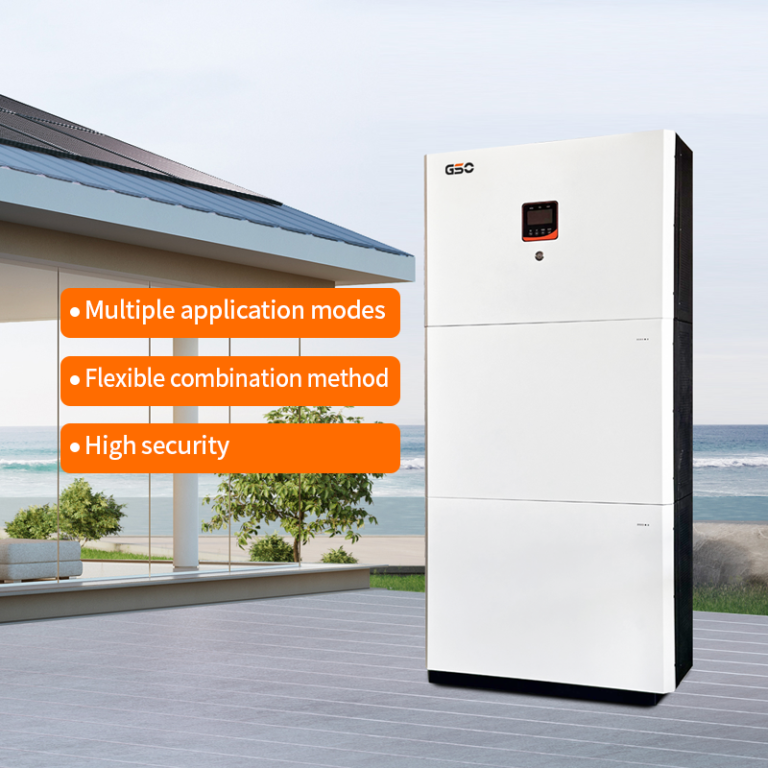
Concluding advisories
Three golden rules will guide a durable choice: 1) match the balancing strategy to the expected duty cycle and ambient conditions rather than defaulting to the lowest upfront cost; 2) require measurable lifecycle projections from suppliers that include DoD and high‑temperature performance; 3) insist on a BMS with comprehensive telemetry and firmware support so balancing parameters can be tuned in situ. Proper application of these rules reduces premature replacements and improves system uptime.
Adoption of a balancing approach should culminate in equipment choices aligned with operational realities — and that is precisely the strength of integrated offerings from gsopower. —