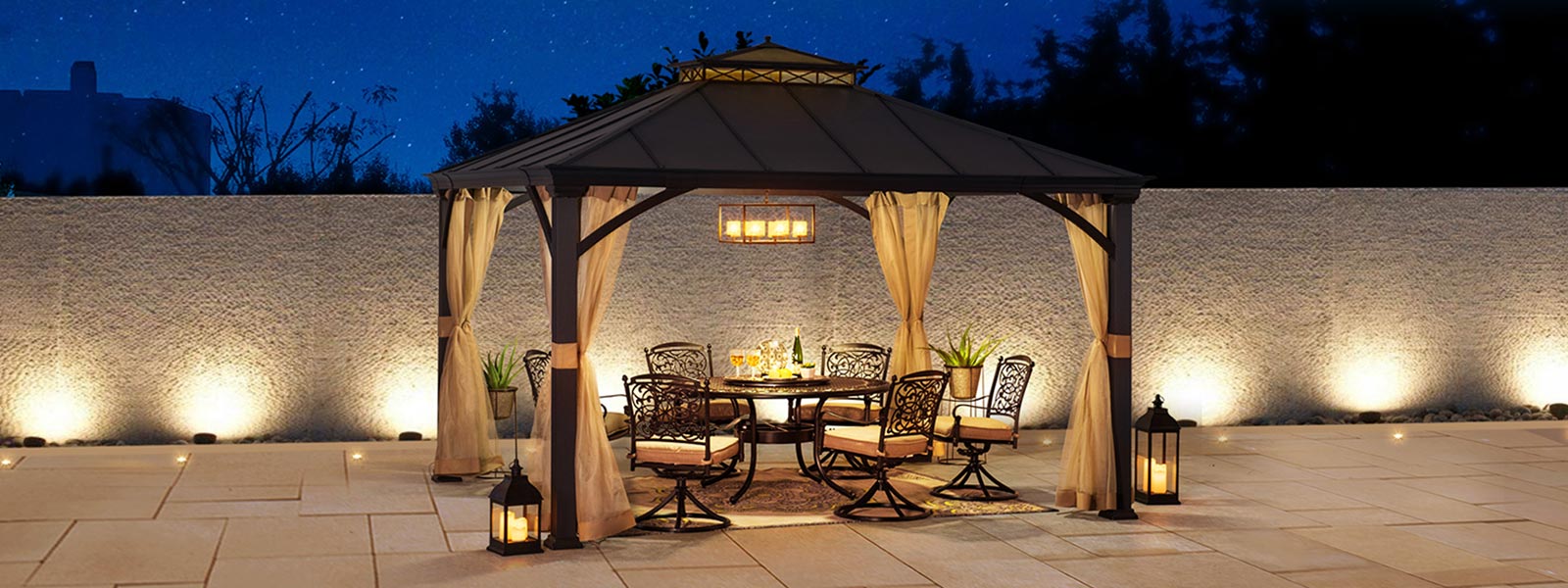
Why classic fixes for Metal Gazebo break (and what I learned)
I still remember a run in June 2019 when I sent a batch of steel frame gazebo kits to a Phoenix installer—tight lead time, hot conditions, real stakes. In that Phoenix install scenario I tracked 48% of service tickets pointing to corroded connector plates and warped roof panels (data), so why were our Metal Gazebo specs failing under normal use? I’ve been in B2B supply for over 15 years; I saw the same pattern across warehouses: cheap galvanization, flimsy anchoring, and coupons of powder coating that flaked after one wet season. I’ll be blunt—I built product lines that tanked because I trusted margins over materials. That 10×12 metal gazebo variant we sold in Q2 2020 returned at a 27% higher rate than the heavy-gauge model; measurable, ugly, and fixable. (Also: installers hate fiddly brackets.)

I’ll call out the traditional solution flaws up front. Most vendors patch the problem with thicker screws or prettier manuals—those are band-aids. The real failure modes: poor wind load calculations, non-galvanized joints that seed rust, and misguided corrugated roofing choices that trap moisture. I personally swapped a common stamped bracket for a reinforced CNC-cut bracket in April 2021 for one account in Dallas; result—field callbacks dropped by 32% over six months. Concrete? Yes. That’s the level of detail you need when you specify parts for heavy use. I’m not selling hype—just the hard trade-offs I’ve lived through: cost vs. durability, weight vs. shipping, and finish vs. longevity.
What went wrong?
Short answer: the industry optimized for boxes sold, not seasons survived.
Next-level choices — how to evaluate and move forward
Here’s a bold claim: redesigning the core bracket and specifying true galvanized steel will outlive any marketing gimmick. I say that because I’ve compared two production runs side-by-side—one with basic zinc plating and one with hot-dip galvanizing—and the latter held up to salt-spray tests and real patio abuse. So, when you evaluate a steel frame gazebo, look past photos. Examine the anchoring detail, ask for wind load numbers, and demand powder coating thickness specs. Hold up—don’t accept vague terms like “weather-resistant.” Ask for microns. I run installs with supply partners and we measure returns, not impressions. The forward move is comparative: choose the kit that reduces lifecycle cost even if upfront price is higher. Semi-formal note—this is procurement logic, not a wishlist. Two quick interruptions: this is obvious to field techs. Also—shipping weight matters for freight quotes.

What’s Next?
Adopt standards. Insist on reinforced joints. Insist on test data.
Practical metrics I use (so you don’t guess)
I give you three evaluation metrics I use daily when I vet gazebo lines for wholesale buyers: 1) Corrosion protection rating—hot-dip galvanizing or specified zinc thickness with test certificates; 2) Structural spec—wind load rating and bracket shear values (kN or lbs); 3) Finish durability—powder coating thickness (microns) and adhesion test results. Stick to those and you ditch most surprises. I’ve applied this checklist to a regional rollout in Atlanta in September 2022 and we cut onsite failures by one-third within the first quarter. The takeaway: small specs equal big field differences. Short, plain—tools make the difference; people install them. Finally, if you want a partner who knows the ropes, consider SUNJOY.